Monday, May 24, 2021, 4:15 – 6:15 PM EDT Wednesday, May 26, 2021, 8:30 – 10:30 AM EDT
Organizer: Dirk Bernhardt-Walther, University of Toronto Speakers: Jessica Witt, Colorado State University; Benjamin Balas, North Dakota State University; Michelle Greene, Bates College; Michael Cohen, Amherst College; Dirk Bernhardt-Walther, University of Toronto
The Covid-19 pandemic has catapulted instructors at universities and colleges into a new reality of online teaching. They had to rapidly adapt and innovate to adjust their proven classroom-based courses to the new reality of physically distant learning, with challenges to material delivery, student engagement, and student assessment. In this Satellite Event we will provide a forum for instructors teaching vision-related courses to exchange ideas, best practices, and materials. We will offer advice by experienced instructors on practical demonstrations that can be performed by students at home, student engagement in an online setting, open pedagogies in the online/hybrid realm, as well as incorporating online laboratory work in teaching vision-related courses. We will discuss ideas for bridging the gap between demonstrations and structured observations and the use of quantitative models for problem-solving in vision science courses. We invite the VSS community to participate in an open panel discussion to share their own experiences with teaching during the pandemic.
Jessica Witt
Colorado State University
Teaching a Sensation & Perception Lab On-Line
Benjamin Balas
North Dakota State University
Vision science on paper: Analog demos to support problem-solving in Sensation & Perception
Michelle Greene
Bates College
Disposing with the disposable assignment: the power of open pedagogies for transformational learning
Michael Cohen
Amherst College
Strategies for assessing student learning
Dirk Bernhardt-Walther
University of Toronto
Forging an active student community in a large, asynchronous course
Organizer: Dr. Sam Hutton, SR Research Ltd Speaker: Dr. Sam Hutton, SR Research Ltd
Understanding the key determinants of eye tracking data quality is critical for researchers who want to maximize their ability to detect significant effects in gaze metrics and generate and report high quality, replicable data. However, the topic is something of a terminological minefield, with concepts such as “noise” and “resolution” being used to mean different things by different researchers and manufacturers. In this Satellite Event, SR Research staff will discuss the key determinants of eye tracking data quality, and provide clear instructions for how critical data quality metrics such as accuracy and precision can be derived from EyeLink data. The workshop will also describe a range of tips and tricks that attendees can use to ensure they maximize data quality in their own EyeLink systems – from optimizing camera and participant set-up, to choosing the most appropriate calibration model. The overall aim of the event is to provide EyeLink users with the tools they need to measure and report eye tracking data quality, and to help them ensure that they are using their equipment optimally.
The following SR Research Webinar contains some useful background information: How EyeLinks Work.
Organizers: Charisse Pickron, University of Minnesota; Alejandro Lleras, University of Illinois at Urbana-Champaign
The Mentoring Envisioned project is being developed by the members of FoVea, Visibility, and SPARK, to facilitate networking and mentoring opportunities for all members of the VSS community. The first half of the event will feature a panel discussion on mentoring (sponsored by FoVea) and the second half will include small group discussions of our newly launched Mentoring Envisioned SLACK channel, which will be open to all VSS members who are interested in building community and further developing connections both through affinity groups and through scientific interests. We hope the SLACK channel and mentoring event will foster new connections that will help participants, especially those new to VSS, navigate the meeting, network, and will provide strong social support for members of underrepresented groups in the society.
Tuesday, May 25, 2021, 9:15 – 10:15 AM EDT Tuesday, May 25, 2021, 5:15 – 6:15 PM EDT
Organizers: Belle Lin, WorldViz VR; Matthias Pusch, WorldViz VR Speakers: Sado Rabaudi, Dan Tinkham, Matthias Pusch, Andrew Beall
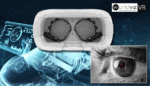
WorldViz VR will teach participants how to set up and perform eye tracking studies in VR using Python and a GUI based configurator. We will explain drag and drop methods for adding 360 videos and 3D models, and demonstrate analytics methods with associated templates. At the end of this session participants will know how to insert their own 3D geometry or 360 video in VR scenes, generate 3D visualizations of the scene and gaze path, extract gaze intersects, view an interactive session replay, save out raw data, and modify the template using their own target objects and parameters.
The presentation and teaching will be provided as a remote meeting with screen-sharing. A live camera view will allow participants to observe the eye tracker setup and operation for several leading eye tracked VR headsets.
Organizers: Alex White, Barnard College; Michael Grubb, Trinity College
LGBTQ students are disproportionately likely to drop out of science early. Potential causes include the lack of visible role models and the absence of a strong community. This virtual gathering is one small step towards filling that gap. We will form a network of support and discuss continuing challenges for queer scientists and for gay rights generally (e.g., LGBT people are not protected against employment discrimination in the majority of the United States, an issue currently before the US Congress). This year we will have a special guest speaker who is very active in promoting the interests of LGBTQ+ scientists nationally. All are welcome.
Monday, May 24, 2021, 8:45 – 10:45 AM EDT Tuesday, May 25, 2021, 2:30 – 4:30 PM EDT
Organizer: Arash Akbarinia, Vivian Paulun, Guido Maiello, Kate Storrs, University of Giessen
Since 2004, the European Summer School, Visual Neuroscience From Spikes to Awareness, has taught many neuroscientists with a broad background. This event aims to reunite all the former alumni and trainees by presenting a number of exciting projects triggered at the Rauischholzhausen Castle. We also encourage the participation of prospective attendees who would like to learn about this Summer School, the various opportunities it offers, and the synergistic community it fosters. Alumni from all generations are invited to present their multidisciplinary, more-or-less scientific final projects. We hope there will be at least one contribution from every year of the summer school. This could be the final fun project or anything else you come up with, such as your favorite pictures from the summer school or a ‘How It Started … How It’s Going’ of the attendees, be creative! The bottom line is to meet and catch up, so please do join us.
Organizers: Caitlin Mullin, VISTA; Doug Crawford, York University Speakers: Caitlin Mullin, VISTA; Doug Crawford, York University
This social event is open to any VSS member who is, knows, or would like to meet a Canadian Vision Scientist! Join us for casual discussions with students and faculty from several Canadian Institutes or to just satisfy your curiosity as to why we in the North are so polite and good natured, Eh? So grab your toques and your double-double and come connect with your favourite Canucks. This year long lock down is sure to make for some great hockey hair!
VISTA is the sponsor of the Undergraduate Just-In-Time Poster sessions.
Organizers: Dr. Lindsey Fraser, VPixx Technologies; Dr. Sophie Kenny, VPixx Technologies Speaker: Dr. Lindsey Fraser, VPixx Technologies
Over the past year, VPixx Technologies has developed the LabMaestro Simulator, a software tool that simulates VPixx’s data acquisition hardware. The Simulator can record button presses from a virtual button box, simulate incoming triggers and analog signals to the virtual data acquisition system, and mimic timestamps for a virtual display. The LabMaestro Simulator allows researchers to develop and test experimental protocols without a connection to in-demand hardware or limited-access research sites, such as MRI suites. Little to no modification of code is required to switch between virtual and physical VPixx devices.
The goal of this satellite is to introduce the LabMaestro Simulator and provide an overview of its functionality. We will start with a review of the register-based architecture shared by all of our hardware, and the benefits this architecture offers for signal timing and synchronization. Principles such as writing to hardware registers, as well as locking triggers and data acquisition to visual events, will be discussed. We will show how the simulator replicates this architecture via a virtual server, and highlight the differences between the behaviour of virtual and physical devices, where such differences exist.
The satellite will end with a demonstration of some of the utilities available through our different licensing options. VPixx staff scientists will be available for questions about the Simulator at the end of the satellite, and throughout the remainder of the conference.
Friday, May 21, 2021, 4:00 – 5:00 PM EDT Sunday, May 23, 2021, 8:00 – 9:00 AM EDT
Organizers: Dr. Sophie Kenny, VPixx Technologies; Dr. Lindsey Fraser, VPixx Technologies Moderator: Dr. Lindsey Fraser, Staff Scientist at VPixx Technologies Speaker: Dr. Sophie Kenny, Staff Scientist at VPixx Technologies
Pack&Go is a remote experiment testing and data collection solution under development by VPixx Technologies. Pack&Go runs MATLAB/Psychtoolbox experiments developed by the vision and psychology research communities. The Pack&Go solution provides a high-performance computer architecture for executing Psychtoolbox code remotely. A vetted participant equipped with the correct links and credentials can access the experiment online and stream it to their browser on demand. The participant’s technological requirements are relatively low: the participant will not need to download files to their device or meet specific hardware requirements aside from having a stable internet connection. Pack&Go records data files generated during the execution of the scripts programmed by the researcher, including formats such as .csv and .mat. The data files are stored on a secure server alongside anonymized participant information and information about the network’s quality during the data collection session. When one or more participants have completed the online study, the experiment manager can download the data locally and analyze it, much in the same way as if the researcher had run the experiment on a local computer. VPixx Technologies has worked since 2001 developing innovative hardware and software solutions to meet the needs of vision scientists and the extended research community. Pack&Go’s development emerged from our long tradition of developing products based on continuous discussions with our customers and in conjunction with early-adopting labs willing to serve as guides for our development. Work on Pack&Go began in 2020 in collaboration with Dr. Caroline Blais and Dr. Daniel Fiset from the University of Quebec in Outaouais (UQO). With Pack&Go, VPixx Technologies will enable researchers who use Psychtoolbox to retain the ability to design their complex experiments and stimuli and run them online, maintaining similarity with the experiments they usually run in their laboratories. The satellite session’s objective is to demonstrate the project’s current state in a live demo and obtain early feedback from the community. To help us plan this event, please send an email signalling your interest to . We hope to see you at the satellite session!
Monday, May 24, 2021, 8:00 – 9:00 PM EDT Wednesday, May 26, 2021, 2:30 – 3:30 PM EDT
Organizers: Jeff Mulligan, Independent contractor to UC Berkeley; Jeremy Wilmer, Wellesley College Speakers: Ken Nakayama, Jeremy Wilmer, Justin Junge, Jeff Mulligan, Sarah Kerns
This satellite event will provide a tutorial overview of the new-and-improved version of The Experiential Learning Lab (TELLab2), a web-based system that allows students to create and run their own psychology experiments, either by copying and modifying one of the existing experiments, or creating a new one entirely from scratch. The TELLab project was begun a number of years ago by Ken Nakayama and others at Harvard University, and continues today under Ken’s leadership from his new position as adjunct professor at UC Berkeley. TELLab2 is still in development, but is targeted to be ready for production use in fall classes this year. This satellite will give a sneak preview of some of the new features not available in the original TELLab, and provide an opportunity for the potential user community to request the additional features that would be most useful in their own teaching.
After a short introduction, TELLab2 gurus will provide a live demonstration of some of the new capabilities. Complete details can be found on TELLab’s satellite information website: http://vss.tellab.org. Potential attendees are welcome to visit the beta version of the site at http://lab2.tellab.org, with the caveat that the site is still in flux and not all of the advertised features are fully-functional as of this writing.