
Saturday, May 16, 2026, 12:45 – 2:15 pm, Banyan/Citrus
Organizers: Brady Roberts, University of Chicago; Amy Bucklaew, University of Rochester; and Vladislav Khvostov, The Ohio State University
Moderator: Anya Hurlbert, Newcastle University
Speakers: Nick Blauch, NVIDIA; Michele Greene, Barnard College; Brad Postle, University of Wisconsin–Madison
Are you using AI in your research? Should you be? This year, the VSS Student-Postdoc Committee (SPC) is hosting a workshop and panel discussion focused on a top-to-bottom analysis of the current state of AI use in science. This session will bring together three speakers with complementary perspectives on (1) the practical use of AI in science, (2) the ‘rules’ of AI in academia, and (3) the current limitations of AI as a tool for research. Run by students, for students, we aim to provide a well-rounded view of whether / how you should use AI ethically in your own research, as well as some basic education on how to prepare for the evolving norms of AI in science.
This session brings together three speakers with complementary perspectives on the practical use of AI in psychological science, the evolving rules of AI in academia, and the current limitations and pitfalls of AI as a tool for research. Together, they will provide a well-rounded view of how AI tools are being used today, how norms around their use are evolving, and where clear limitations still remain.
Our first speaker, Nick Blauch, will begin by discussing the hands-on use of contemporary AI tools in science. Topics will include 1) using AI chat-bots and agents as scientific partners to explore new ideas, develop prototypes, and understand research papers; and 2) how to integrate coding agents into research software development, and 3) how to leverage AI as the language for developing computational models for vision science and neuroscience. Drawing on his work at NVIDIA, Nick will briefly highlight how advanced simulation platforms and RL training frameworks (e.g. Isaac Sim and Isaac Lab) can enable the development of next-generation, embodied computational vision models.
Next, our second speaker, Dr. Brad Postle, will address the rapidly changing guidelines surrounding AI use in research. He will speak about his experience as an Editor for Journal of Cognitive Neuroscience and discuss how journals are responding to the growing use of generative AI in the field. What guidelines does the Journal of Cognitive Neuroscience hold about use of generative AI? Is there talk of using AI-assisted peer review? Should you be documenting prompts or archiving AI interactions?
Finally, our third speaker, Dr. Michelle Greene, will take a step back to examine what AI can and cannot do using a wider lens. She will focus on the theoretical and practical boundaries of current models and will explain how systems such as LLMs were trained and how they operate. Dr. Greene will also discuss current limitations and pitfalls of AI, such as hallucinations, overconfidence, and the risk of misplaced trust, as well as environmental impact. The goal of these discussions is to underscore the idea that AI is a tool whose value depends on using it for tasks aligned with its design.
The session will conclude with a Q&A panel, allowing attendees to ask practical questions, discuss real-world scenarios, and engage directly with the speakers. The goal of this event is to help researchers at all career stages make informed, responsible, and effective use of AI while maintaining scientific rigor and integrity.

Nick Blauch
NVIDIA
Nick Blauch is a Sr. Research Scientist at NVIDIA. He received his PhD in Neural Computation from Carnegie Mellon University, where he developed computational models of high-level vision and spatial topography in the visual system, notably the Interactive Topographic Network (ITN). He then completed a postdoctoral fellowship in the Harvard Vision Sciences Lab, where he developed a new computational approach to foveated visual perception (FOVI), based on the link between retinal sampling and V1 topographic organization. He has recently joined NVIDIA, where he is working on multimodal perception and learning in robotics, with a focus on scaling up learning in simulation.

Michelle Greene
Barnard College
Michelle Greene is an Assistant Professor in the Psychology Department at Barnard College, Columbia University. She received her Ph.D. in Cognitive Science from MIT and had postdoctoral training in computer vision at Stanford. Her research sits at the intersection of cognitive neuroscience and computer vision, and she has spent over a decade investigating how biological and artificial neural networks represent the visual world and where they diverge. Her work has revealed systematic biases in deep learning systems, including socioeconomic biases in scene recognition and fundamental gaps in how vision-language models understand affordances compared to humans. She holds an NSF CAREER award and has published extensively on the relationship between human and machine perception.
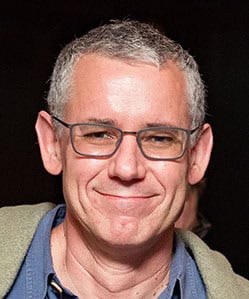
Brad Postle
University of Wisconsin Madison
Brad Postle is a cognitive neuroscientist whose research foci are attention, short-term memory (a.k.a. working memory), and consciousness. Postle earned his PhD in Systems Neuroscience from MIT in 1997. His doctoral research, in the laboratory of Suzanne Corkin, emphasized experimental neuropsychology studies of working memory and nondeclarative memory in a variety of neurological patient groups, including Alzheimer’s disease, Parkinson’s disease, and anterograde amnesics (the latter including the renowned patient H.M.). Postle next obtained postdoctoral training in functional magnetic resonance imaging (fMRI) methods at the Dept. of Neurology of the University of Pennsylvania, under the supervision of Mark D’Esposito. He joined the faculty of the Dept. of Psychology at the UW–Madison in 2000, and was granted an appointment on the Executive Committee of the Dept. of Psychiatry in 2008. He is also a trainer in the Neuroscience Training Program and the Medical Scientist Training Program. Postle’s research group is based at WisPIC, where it uses the MRI facilities of the Lane Neuromaging Laboratory, as well as shared space with the Wisconsin Laboratory for Sleep and Consciousness for carrying out research with electroencephalography (EEG), transcranial magnetic stimulation (TMS), and transcranial current stimulation (tACS and tDCS), sometimes in combination. Although the majority of the Postle lab’s research, funded by the National Institute of Mental Health, is carried out with healthy young adult research subjects, the cognitive functions that they study are implicated in many psychopathologies and psychiatric disorders, including attention deficit hyperactivity disorder, depression, and schizophrenia. In addition to his research, Postle also teaches undergraduate and graduate courses through the Dept. of Psychology, and contributes to Dept. of Psychiatry courses for medical students. He is author of the 2015 textbook Essentials of Cognitive Neuroscience.

Anya Hulbert
Newcastle University
Anya Hurlbert is VSS vice-president, and Professor of Visual Neuroscience at Newcastle University, where she co-founded the former Institute of Neuroscience and now steers the Centre for Transformative Neuroscience. She holds degrees in physics, physiology, brain and cognitive sciences, and medicine. Her interest in AI began with simple machine learning models for lightness perception and a 1988 position piece – “Making Machines (and Artificial Intelligence) See”, Daedalus – and continues now with applications of AI to retinal image analysis for diagnostics.