Public Lecture – Patrick Cavanagh

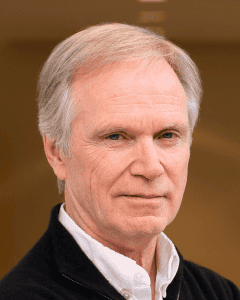
Patrick Cavanagh

Department of Psychology, Glendon College, Toronto, Canada

Using Illusions and Art to Understand the Visual Brain

Monday, May 19, 2025, 3:00 – 4:00 pm, The Dalí Museum, One Dalí Boulevard, St. Petersburg.

Everybody loves illusions. At times, the content on the internet seems to be mostly about illusions – shoes, dresses, straight lines looking bent. This attraction has a long history but illusions are not just for fun, they can also reveal how our vision works. I will present several examples that show how the brain constructs what we see, sometimes in unexpected ways. I will also cover the most compelling of visual illusions: art, where impressions of depth and light arise from nothing more than pigments on a flat surface. Interestingly, painters have discovered many shortcuts that break the rules of physics but go unnoticed. These errors, like impossible shadows, work because our brains take shortcuts too. The errors that painters can get away with reveal which rules do and don’t count for visual perception. We will show how to use art and illusions to do “science by looking” to unlock many of the basic processes of the visual brain.

About our Speaker

Patrick Cavanagh is a Senior Research Fellow at Glendon College of York University in Toronto. He received a B. Eng. from McGill University and a PhD from Carnegie-Mellon University. He has been a professor at the Université de Montréal, Harvard University, the Université Paris Cité and Dartmouth College. He is a leading scholar on vision research where he has pioneered new directions in the study of attention and the position sense – how we know where things are. He has also explored how artists’ techniques offer insight into how the brain works. He has published over 300 articles and book chapters and a book on shadows. He holds an honorary doctorate from the Université de Montréal and is a Fellow of the Royal Society of Canada.

About the VSS Public Lecture

The annual public lecture represents the mission and commitment of the Vision Sciences Society to promote progress in understanding vision and its relation to cognition, action and the brain. As scientists we are obliged to communicate the results of our work, not only to our professional colleagues, but also to the broader public. This lecture is part of our effort to give back to the community that supports us.

Attending the VSS Public Lecture

Admission to the Public Lecture is free. Registration is required. The lecture will be held on Monday, May 19 at 3:00 pm at the Dalí Museum. Located at One Dalí Blvd., St. Petersburg, 33701.

The Dalí Museum is an approximately ten-mile drive from the TradeWinds Island Grand Resort. On-site parking is available for $10 on a first-come, first-served basis. There are also various surface lots, city parking garages and street parking as well as public transportation. Visit the museum website for more information.

2025 Public Lecture – Patrick Cavanagh

Patrick Cavanagh

Department of Psychology, Glendon College, Toronto, Canada

Using Illusions and Art to Understand the Visual Brain

Monday, May 19, 2025, 3:00 – 4:00 pm, The Dalí Museum, One Dalí Boulevard, St. Petersburg.

Everybody loves illusions. At times, the content on the internet seems to be mostly about illusions – shoes, dresses, straight lines looking bent. This attraction has a long history but illusions are not just for fun, they can also reveal how our vision works. I will present several examples that show how the brain constructs what we see, sometimes in unexpected ways. I will also cover the most compelling of visual illusions: art, where impressions of depth and light arise from nothing more than pigments on a flat surface. Interestingly, painters have discovered many shortcuts that break the rules of physics but go unnoticed. These errors, like impossible shadows, work because our brains take shortcuts too. The errors that painters can get away with reveal which rules do and don’t count for visual perception. We will show how to use art and illusions to do “science by looking” to unlock many of the basic processes of the visual brain.

About our Speaker

Patrick Cavanagh is a Senior Research Fellow at Glendon College of York University in Toronto. He received a B. Eng. from McGill University and a PhD from Carnegie-Mellon University. He has been a professor at the Université de Montréal, Harvard University, the Université Paris Cité and Dartmouth College. He is a leading scholar on vision research where he has pioneered new directions in the study of attention and the position sense – how we know where things are. He has also explored how artists’ techniques offer insight into how the brain works. He has published over 300 articles and book chapters and a book on shadows. He holds an honorary doctorate from the Université de Montréal and is a Fellow of the Royal Society of Canada.

About the VSS Public Lecture

The annual public lecture represents the mission and commitment of the Vision Sciences Society to promote progress in understanding vision and its relation to cognition, action and the brain. As scientists we are obliged to communicate the results of our work, not only to our professional colleagues, but also to the broader public. This lecture is part of our effort to give back to the community that supports us.

Attending the VSS Public Lecture

Admission to the Public Lecture is free. Registration is required. The lecture will be held on Monday, May 19 at 3:00 pm at the Dalí Museum. Located at One Dalí Blvd., St. Petersburg, 33701.

The Dalí Museum is an approximately ten-mile drive from the TradeWinds Island Grand Resort. On-site parking is available for $10 on a first-come, first-served basis. There are also various surface lots, city parking garages and street parking as well as public transportation. Visit the museum website for more information.

2025 Sponsorship Opportunities

We are pleased to invite you to sponsor the VSS 2025 meeting! VSS will hold an in-person meeting on May 16-20, at the beautiful TradeWinds Island Resorts in St. Pete Beach, Florida.

This year marks the tenth year we have held our meeting at the Tradewinds. The City of St. Pete Beach is a barrier island community located just off the mainland of St. Petersburg, just south of Treasure Island, and 20 miles from Clearwater Beach. With miles of pristine, white sandy beaches, year-round sunshine, an abundance of recreational opportunities, restaurants, and shopping, St. Pete Beach is among the most enjoyable places to live and vacation in the world. A short 15 minute drive away, the city of St. Petersburg boasts world-class museums, including the Salvador Dali Museum.

The Vision Sciences Society is committed to progress in understanding vision and its relation to cognition, action and the brain. Our primary goal is to host a yearly meeting where both new and established investigators can present and discuss their work in a relaxed informal setting. Our interdisciplinary nature is reflected by the program committee and review board.

Between 1,500 and 2,000 international researchers will participate in this year’s VSS Annual Meeting. VSS members represent all fields related to vision science.

Sponsorship Types

There are two types of VSS sponsorship: Meeting Sponsorship and Corporate Membership. The levels for each are described below.

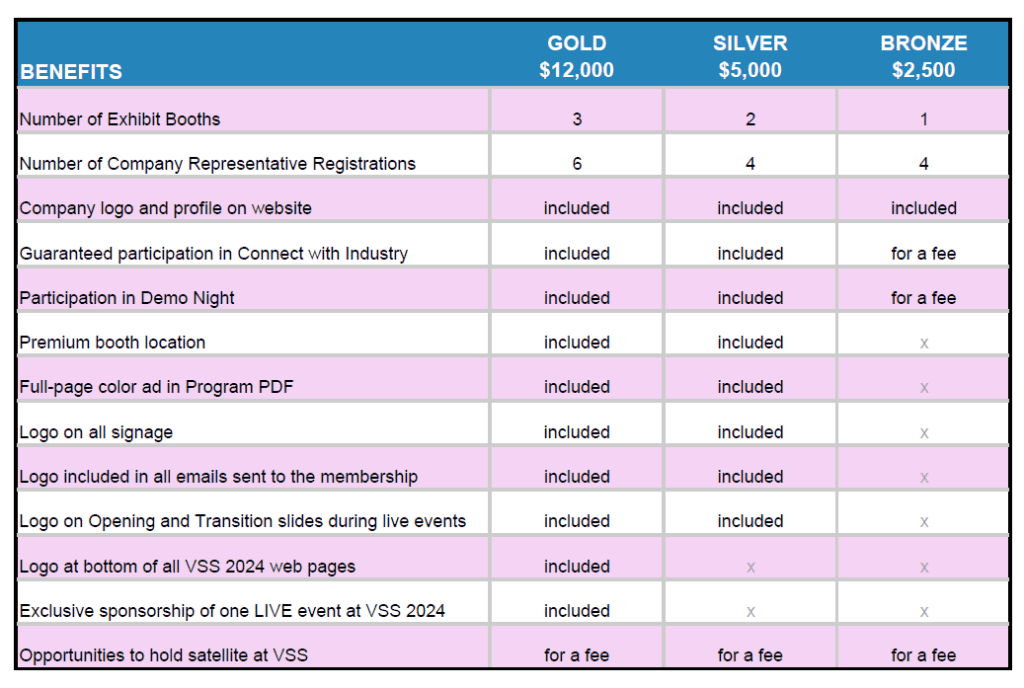
Meeting Sponsorship Tiers

Corporate Membership Levels

Level 2 Membership, $20,000

  • All benefits of Gold Sponsorship (if desired)
  • Up to 8 employee memberships
  • Registration to VSS for those 8 employees
  • 2 job ads directed to membership per year
  • Guaranteed participation in ‘Connect with Industry’ event
  • Option to present at ‘Demo Night’
  • Opportunity to host satellite event at annual meeting (additional fees)

Level 1 Membership, $25,000

  • All benefits of Gold Sponsorship (if desired)
  • Up to 10 employee memberships
  • Registration to VSS for those 10 employees
  • 3 job ads directed to membership mailing list per year
  • Guaranteed participation in ‘Connect with Industry’ event
  • Option to present at ‘Demo Night’
  • Opportunity to host satellite event at annual meeting (additional fees)

Exhibit Booths at VSS

To exhibit at VSS, you must purchase a Meeting Sponsorship or Corporate Membership.

Sponsorship/Membership applications must be received by February 20, 2025 to receive published pricing. The last day applications will be considered is April 7 (although exhibit space may sell out before that date and space is not guaranteed).

Exhibit booths are located in the Pavilion at the TradeWinds Island Resorts, adjacent to the posters, allowing for maximum visibility to VSS participants. Exhibit space is one 8’ deep by 10’ wide booth, and includes curtain side rails and backdrop, 6’ x 30’’ skirted table, two chairs, and identification sign.

Exhibit space is assigned on a first-come, first-served basis. (Silver and Gold sponsors will receive first choice/premium spaces.) Please read our Exhibitor Agreement for hotel policies, set-up and tear-down instructions, insurance requirements, and other guidelines.

Thank you for your interest. Exhibit space is now fully booked and the application is closed. Please contact us at if you are interested in customizing a sponsorship package.

Exhibit Hours

Friday, May 16 
Exhibits load-in and set up4:00 – 7:00 pm
Saturday, May 17 
Exhibits load-in and set up7:00 – 9:00 am
Exhibits open8:00 am – 5:30 pm
Morning poster session8:30 am – 12:30 pm
Afternoon poster session2:45 – 6:45 pm*
Sunday, May 18 
Exhibits open8:00 – 5:30 pm
Morning poster session8:30 – 12:30 pm
Afternoon poster session2:45 – 6:45 pm*
Monday, May 19 
Exhibits open8:00 am – 12:30 pm
Morning Poster Session8:30 am – 12:30 pm
Tuesday, May 20 
Exhibits open8:00 am – 5:30 pm
Morning poster session8:30 am – 12:30 pm
Afternoon poster session2:45 – 6:45 pm
Exhibitor Tear-down5:30 – 8:30 pm

*Exhibit area will be stanchioned off at 5:30 pm and linens will be offered to cover exhibit tables.

Important Dates

February 20, 2025Deadline to submit early sponsorship applications, and receive published pricing
March 3, 2025Deadline to submit logo and company description for VSS website
April 2, 2025Deadline to submit ads for the program 
April 7, 2025Deadline to submit late sponsorship applications
April 15, 2025Booth assignments complete

*Applications received after February 20 will incur an additional charge of $250 for late processing.

Additional Sponsorship Opportunities

Coffee Break Sponsorship – $2000

Gain exclusive visibility with our Coffee Break Sponsorship! As the sole sponsor of a designated coffee break, your organization will be featured on event signage, ensuring high exposure. You’ll also have a dedicated table during the break to share information, engage with attendees, and make meaningful connections.

Meeting Lanyards – $3000

Place your branding around the necks of our attendees, ensuring maximum visibility throughout the entire event with our exclusive Lanyard Sponsorship! All registered attendees are required to wear badges at all times, making this a high-impact opportunity to showcase your logo. Your branding will be prominently displayed on the lanyards worn by every participant, providing continuous exposure in sessions, networking events, and throughout the venue.

If you are interested in customizing a sponsorship package please contact us at .

Venue Search FAQ

Update (May 2026): VSS 2027 will be held in Seattle, WA and VSS 2028 will be back at the Tradewinds at St. Pete Beach, FL!

VSS 2027: May 21-25, Seattle, WA
VSS 2028: May 19-23, St. Pete Beach, FL
VSS 2029 and beyond: to be determined

Why did VSS initially decide to look at alternative sites to the Tradewinds in Florida?

Due to requests from a significant proportion of our members, who expressed concerns about safety due to recent changes in Florida laws regarding education, abortion rights, race and gender expression.

What years are we considering holding VSS ‘off-site’ from the TradeWinds?

Due to contractual constraints with hotels as well as hotel availability for a large conference such as ours, sites must be confirmed years in advance. We have considered alternating between St. Pete Beach and non-Florida sites. However, we will need to decide on the site for 2029 BEFORE the Seattle conference takes place, so we won’t be able to take into consideration how well that meeting worked, and especially the relative numbers of attendees from Europe vs. Australasia who are able to attend in Seattle. Thus, sites for 2029 and beyond will be constrained by hotel availability despite substantial uncertainty about attendance. Note that attendance in Florida has only dropped slightly the last two years, so that VSS remains financially solid. We will, of course, take into account the preferences of the membership (determined via our annual post-meeting survey).

What are the main constraints for choosing a venue?

The primary constraints, in no particular order, are:
* Environmental and Transportation Costs: Venues must be in close proximity to a major airport with direct national and international flights.
* Conference Expenses: These include hotel room costs, food and beverage minimums, and meeting space fees.
* Safety: This includes both crime statistics, and the political climate, specifically regarding inclusiveness and attendee safety.
* Weather: While VSS meets outside the main hurricane season, we must consider the potential impact of hurricanes on venue availability. For example, the TradeWinds was seriously damaged following two hurricanes in Fall 2024.
* Conference Size: With approximately 2,000 attendees, our conference size presents a unique challenge. Our group is too large for many hotels with meeting spaces to host comfortably. It is also too small for many convention centers, which may result in excessive costs or underutilized space. The venue must strike the right balance while providing a warmth and “personality” that aligns with VSS’s character (casual & friendly). As such, we are most likely looking at a hotel equipped with conference facilities that can accommodate our group size and needs, efficiently and cost-effectively.

What has the VSS Board done to find an alternate venue?

After the 2024 meeting, the VSS Board formed a sub-committee to evaluate options. This sub-committee worked closely with Shauney Wilson (VSS Executive Director) to investigate sites and negotiate with potential host cities and hotels.

What alternative locations to the TradeWinds are currently being considered?

The current short list includes sites in Denver and Seattle. Each of these cities was chosen based on a comprehensive evaluation of the key factors listed above (accessibility, cost, safety, inclusiveness, venue suitability, etc.).

What locations are ruled out, and why?

As mentioned earlier, over 40 potential locations have been evaluated. Below are the primary reasons for excluding some of the most notable options.

Puerto Rico

* Initial Appeal: Puerto Rico was initially considered due to its tropical setting, unique cultural offerings, and the potential for an affordable venue.
* Reasons for Exclusion: Concerns about inclusiveness were raised, and the Island’s infrastructure hasn’t fully recovered from the hurricanes of 2017.

Europe

* Initial Appeal: Europe has numerous advantages, including excellent infrastructure, attractive venues, and ease of travel.
* Reasons for Exclusion: The Board is worried that a Spring meeting in Europe could negatively impact attendance for ECVP, typically held in August. This worry was shared by some European members of VSS (note that, ECVP not being linked with a society, it could not be formally consulted).

Canada

* Initial Appeal: Canada offers proximity to the U.S., a politically inclusive environment, and world-class venues in cities like Toronto, Montreal, and Vancouver.
* Reasons for Exclusion: Despite serious consideration, these cities were ultimately ruled out due to high costs, limited availability of suitable venues, and visa challenges for international students studying in the U.S., as well as other international attendees.

Virginia Beach

* Initial Appeal: Virginia Beach was considered as a potential ‘beachy’ alternative to the TradeWinds, with the added benefit of inclusiveness.
* Reasons for Exclusion: Lack of accessibility to a major international airport combined with susceptibility to hurricanes presented too great a risk for long-term planning.

California

* Initial Appeal: California offers international airport hubs, good weather, and a range of cultural opportunities for attendees.  
* Reasons for Exclusion: All quotes received from attractive California locations (Los Angeles, San Diego, and San Fransisco) far exceeded our budget. Also, travel distance posed a challenge for a large proportion of VSS attendees, particularly those traveling from Europe or the Middle East.

How will the venue change impact registration rates and other meeting costs?

Our current research suggests that any alternative to the TradeWinds will likely result in increased hotel and food costs for both VSS and attendees. These increases could be offset by lower travel costs for some attendees. It is also worth noting that costs at the TradeWinds are expected to rise at rates exceeding inflation over the next several years, and that future hotel construction can introduce uncertainty about its ability to host VSS in certain future years (yet to be determined).

Planning a Satellite or Social Event

VSS welcomes members to submit proposals for both satellite and social events to be held at VSS 2026.

A VSS satellite or social event is an event originated by VSS members or conference attendees that require venue facilities, publicity in VSS media, or coordination with VSS staff.

Examples of satellites include special interest groups, user groups, committee meetings, workshops, tutorials, or scientific meetings. Social events are gatherings of any of the VSS communities that are predominantly social in nature. Examples include Visibility, Canadian Social, etc.

Satellite and social events can be open to all attendees or be invitation only, but they may not overlap with any official VSS event. Time slots for satellites are listed below. Please note that your preferred slot may not necessarily be available. Scheduling is at the discretion of the VSS Board of Directors.

DayTime Slots Available
Saturday12:30 – 2:30 pm
Sunday 12:30 – 2:30 pm, 7:30 – 10:00 pm
Monday2:00 – 5:30 pm
Tuesday12:30 – 2:30 pm, 7:30 – 10:00 pm

All satellites and social events must be approved by VSS. An application form must be completed and submitted by January 9, 2026.

Approved satellite and social events will be scheduled in January and organizers of accepted events will be notified thereafter. Listing of Satellite and Social Events in VSS media is at the discretion of VSS.

Satellite and Social Event Fees

Social Events

  • VSS members: $300
  • Commercial partners: $500

Satellite Events

  • VSS members not charging a satellite registration fee: $300
  • VSS members charging a satellite registration fee: $500
  • Commercial partners: $1,000

Organizers are responsible for the costs of food and A/V. VSS staff are solely responsible for coordinating and arranging the food, A/V, room assignment, and promotion in VSS media (program, website, and signage). Please check with VSS if you have any questions. Any changes to the arrangements or late special requests may incur additional fees.

Organizer Requirements

Organizer Responsibilities

Organizers must:

  • Work directly with the VSS Executive Director (Shauney Wilson) and designated staff regarding all event logistics.
  • State clearly in all communications about the event, including written materials and emails, that the Satellite or Social Event is neither sponsored nor endorsed by VSS.
  • Announce at the beginning of the event that the event is not sponsored or endorsed by VSS.
  • Assume full financial responsibility for food/beverage services and equipment ordered (including setup and tear down labor, room rental, and reset fees, if applicable). A deposit to VSS may be required at least one week prior to the event.
  • Obtain additional liability insurance and/or permits (if necessary).
  • Order miscellaneous items, except those requested on the standard form (i.e., audiovisual, staging, etc.), from VSS vendors, unless given written permission by the VSS Executive Director.
  • Use services only from VSS’s official vendors, unless given written permission by the VSS Executive Director.
  • Remove all signage and meeting materials (e.g., handouts) from assigned rooms at the event’s conclusion and agree to pay any cleaning fee resulting from use of the space.
  • Adhere to the VSS Code of Conduct as established by the VSS Board of Directors.

Prohibited Actions

  • Demonstrations, displays, and/or marketing or distribution of commercial products is not permitted during Satellite and Social Events. Event speakers may refer to a product as a reference tool during presentations.
  • Promotional literature advertising the Satellite or Social Event may not be distributed as door drops in hotels, unless given written permission by the VSS Executive Director. Event organizers may not conduct drawings or award gifts to meeting attendees, unless given written permission by the VSS Executive Director.
  • Organizers cannot use the VSS acronym in website URLs, unless given written permission by the VSS Executive Director.
  • No recording without permission.

Schedule

Applications Accepted: November 20, 2025
Applications Deadline: January 9, 2026
Please use our online Satellite Event Request Form to submit the details of your satellite event.

2025 Keynote – Anne Churchland

Anne Churchland

Professor of Neurobiology in the David Geffen School of Medicine at the University of California, Los Angeles (UCLA).

Anne Churchland received her B.A. in mathematics and psychology from Wellesley College. She received her Ph.D. in Neuroscience from the University of California, San Francisco (2003), working with Steve Lisberger on Representations of Eye and Image Velocity in Extrastriate Cortex. She transitioned to postdoctoral training at the University of Washington (2004 – 2010) working with Mike Shadlen on perceptual decisions in the Lateral Intraparietal area. She was a principal investigator in neuroscience at Cold Spring Harbor Laboratory from 2010 until she joined the UCLA faculty in May 2020.

The Churchland laboratory investigates the neural circuits that support decision-making. When making decisions, humans and animals can flexibly integrate visual signals with other sources of information before committing to action. The ability to flexibly use incoming information distinguishes decisions from reflexes, offering a tractable entry point into more complex cognitive processes defined by flexibility, such as abstract thinking, reasoning and problem-solving.

To understand the neural mechanisms that support decision-making, the Churchland lab measures and manipulates neurons in cortical and subcortical areas while animals make decisions about visual (and sometimes auditory of multisensory) signals. To connect the neural responses with behavior, her lab uses mathematical analyses aimed at understanding how information is represented at the level of neural populations, both at a given moment and over time. Recent work has demonstrated that in diverse cell types, sensory and movement signals co-modulate neural activity, even in trained experts. The timing of movement signals is informative about the animal’s internal state of engagement.

Churchland has received research awards from the McKnight Foundation, the Pew Charitable Trusts, The Merck Foundation and the Klingenstein-Simons Foundation. She received the James M and Cathleen D Stone award for significant research accomplishments (Cold Spring Harbor Laboratory, 2020), the Janett Rosenburg Trubatch Career Development Award (Society for Neuroscience, 2012) for demonstrating originality and creativity in research. Her mentoring efforts have been recognized by the Louise Hanson Marshall Special Recognition Award for outstanding dedication to promoting the professional development of women (Society for Neuroscience, 2017) and the UCLA Excellence in Mentoring Award (2024). To broaden the impact of her lab’s efforts, Churchland maintains a YouTube channel and a TikTok stream featuring scientific content aimed at diverse audiences.

The intersection of vision and movements in the mammalian brain

Saturday, May 17, 2025, 7:30 – 8:30 pm, Talk Room 1-2

Human and animal movements are often viewed as a nuisance that “muddies the waters” of efforts to link visual inputs to cognitive processes like decision-making. Such movements are often prevented via hardware, “regressed out” in analysis or simply ignored. However, in naturalistic circumstances, animals and humans make frequent movements during perceptual and cognitive tasks. These include large movements that optimally position the sensor (e.g., the fovea), or smaller, high frequency movements that add spectrotemporal content to a stimulus. Importantly, recent work has demonstrated that movements impact neural activity in early sensory areas, even in experts engaged making visual decisions. In mice, cell-type specific measurements have demonstrated that movements modulate not only neurons that project corticocortically, but also neurons that project to subcortical targets, suggesting that cortical neurons broadcast movement signals throughout the brain. Further, movements modulate neural activity in both head-fixed and freely moving rodents, arguing that movements shape activity in multiple contexts. These observations raise major outstanding questions about the nature of the movement signals, and they extent to which they reflect altered sensory inputs, efference copies, or underlying latent states. Emerging work using a novel, visual accumulation of evidence task that recruits and requires primary and secondary visual cortices begins to shed light on these questions. Taken together, this growing body of observations about the intersection of vision and movements calls for a new framework that acknowledges the diverse ways in which dynamic interactions with the environment can benefit both sensory processing and decision-making. 

Dates and Deadlines

Deadlines shown bold.

DateDeadline
August 15Call for Graphics for Website Banner
September 17Website Banner Competition Closes
October 20Membership Opens
October 20Abstract Submissions Open
October 20Symposium Submissions Open
November 13T-shirt Design Competition Opens
November 15Sponsor and Exhibitor Applications Open
November 20Symposium Submissions Deadline Extended
November 20Satellite Event Applications Open
November 24Ken Nakayama Medal Nominations Open
November 24Davida Teller Award Nominations Open
November 24Young Investigator Award Nominations Open
November 26Notification of Accepted Symposia
December 10Intention to Submit Travel Award Application Extended
December 10Abstract Submission Deadline Extended
December 16Registration Opens (Early Rate)
January 6Travel Grant Applications Open
January 9Satellite Event Applications Deadline
January 15T-shirt Design Competition Deadline
January 19Travel Award Application Deadline
January 22Ken Nakayama Medal Nominations Deadline
January 22Young Investigator Award Nominations Deadline
February 3Board of Directors Nominations Open
February 9Notification of Accepted Abstracts
February 10Call for VSS Student-Postdoc Advisory Committee Applications
February 11Caregiver Grant Applications Open
February 12Demo Night Proposals Open
February 13Davida Teller Award Nominations Deadline
February 19Travel Award Notifications Sent
February 27Early Registration Deadline
March 2Board of Directors Nominations Deadline
March 2Undergraduate Just-In-Time Poster Submissions Open
March 4Caregiver Grant Applications Deadline
March 10Student-Postdoc Advisory Committee Applications Deadline
March 13Demo Night Proposals Deadline
March 20Davida Teller Award Recipient Announced
March 20Caregiver Grant Recipients Announced
March 26Ken Nakayama Medal Recipient Announced
March 27Young Investigator Award Recipient Announced
March 30VSS Student-Postdoc Advisory Committee Announced
March 31Undergraduate Just-in-Time Poster Submission Deadline
April 1Board of Directors Election Opens
April 3Sponsor and Exhibitor Applications Deadline
April 6Meet the Professors Registration Opens
April 10TradeWinds Hotel Reservation Deadline
April 17Meet the Professors Registration Deadline
April 23Standard Registration Deadline
April 24Board of Directors Election Deadline
April 29Deadline to Submit 3MT
April 30Board of Directors Election Results Announced
May 15-19VSS 2026, TradeWinds Resorts, St. Pete Beach, Florida

Student-Postdoc Advisory Committee

The Student-Postdoc Advisory Committee (SPC) works with the members of the VSS Board of Directors to make VSS responsive to the needs of our trainee members and early career researchers. The SPC organizes special events and workshops for trainees in vision science during the annual VSS meeting. These include discussions on career transitions, inclusivity & accessibility, and new scientific directions. The SPC also consults with the board and with other vision community partners (FoVea, Visibility, SPARK) to provide trainees’ perspectives and optimize the society and the conference for trainee members.

Interested in joining SPC?

Each year, VSS solicits nominations for new members of the Student-Postdoc Advisory Committee to replace those rotating off.  VSS seeks a diverse set of graduate and postdoctoral scholars to represent young investigators at a variety of career stages, who study a variety of topics, who bring diverse perspectives, and who reside in different regions of the globe. Service on the SPC (2-year term) provides an excellent opportunity to have a positive impact on the vision science community, to develop professional skills such as team building and project management, and to develop a track record of academic service. Watch for announcements from VSS in mid-February about how to apply.

Current SPC members are indicated below. Terms end in May of the year shown.

Noah Britt (2026)

McMaster University

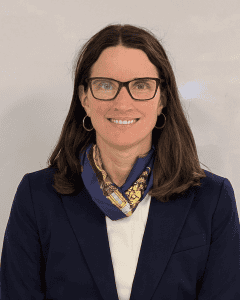
Noah Britt is a PhD candidate at McMaster University in Canada, working under the supervision of Dr. Hong-jin Sun. His research aims to investigate how visual processing and attention mechanisms in real and virtual 3-D space. His dissertation research focuses on how attention can be modulated across depth by factors such as changing task contexts, induced action requirements in driving simulations, and behavioural affordances. As a member of the SPC, Noah is excited to bring an inclusive perspective that can assist the VSS community in supporting early career researchers.

Amy Bucklaew (2026) Board Liaison

University of Rochester

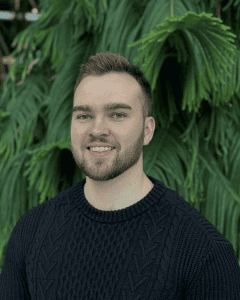
Amy Bucklaew is a PhD student at the University of Rochester working with Dr. Jude Mitchell. Her research aims to investigate the neural mechanisms of visual attention and saccadic eye movements using eye tracking, electrophysiology, and optogenetic techniques. Her dissertation research focuses on how extra-retinal signals modulate tunning and response properties of neurons in area MT/MTC. Amy is committed to listening to different perspectives across the VSS community and building support for the needs of fellow early career researchers. 

Victoria Jacoby

Victoria Jacoby (2026) Record Keeper

Brigham and Women’s Hospital, Harvard Medical School

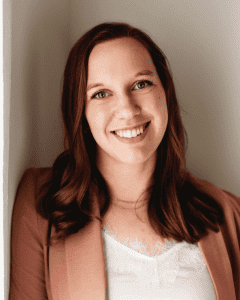
Victoria Jacoby is a postdoctoral scholar working with Dr. Jeremy Wolfe at Brigham and Women’s Hospital, Harvard Medical School. Her research focuses on visual attention, visual search, and perceptual expertise, with a particular emphasis on understanding the visual and perceptual processes involved in medical image perception. As a member of the SPC, Victoria is dedicated to advocating for early career researchers and fostering inclusivity and accessibility within the VSS community.

Akihito Maruya

Akihito Maruya (2025) Chair

State University of New York

Akihito Maruya is a PhD student with Qasim Zaidi at the SUNY Graduate Center for Vision Research in NYC . He studies 3D perception in scenes and pictures, perception of rigid and non-rigid 3D objects, and form distortions perceived by adult and children amblyopes, using psychophysics and computational models. As a member of the VSS-SPC, he would like to make VSS even more inviting to students who have taken a non-traditional path to science and for whom English is not the first language.


Jes Parker

Jes Parker (2025) Board Liaison

University of Tennessee-Knoxville

Jes Parker is a graduate student in the Experimental Psychology doctoral program at the University of Tennessee in Knoxville. They primarily investigate visual perception and memory across saccadic eye movements using eye tracking and functional near-infrared spectroscopy. Specifically, they are interested in examining visual stability, the role of different types of information in the establishment of object correspondence, and the interaction between saccades and visual working memory. As a member of the Student-Postdoc Advisory Committee, they want to contribute to the progress towards a more diverse community of researchers that fosters both the growing representation and retention of individuals from historically underrepresented populations.

Brady Roberts

Brady Roberts (2026)

University of Chicago

Brady is a postdoctoral scholar working with Dr. Wilma Bainbridge at the University of Chicago. His research focuses on how visual design influences what we remember. By investigating how common visual symbols (e.g., !@#$%) impact memory, he explores which visual and conceptual features make an image memorable or forgettable. As a member of the SPC, Brady intends to provide mentoring and support for early career researchers in the VSS community, creating an open and productive meeting for all.

Undergraduate Just-In-Time (UJIT) Poster Submissions

VSS 2026 will once again offer Undergraduate Just-in-Time Poster Sessions, designed for undergraduate students, post-baccalaureate researchers, and research assistants working on independent research projects. These poster sessions will be held in person at the annual meeting in two sessions: Sunday morning and Tuesday afternoon. Submissions are now closed.

UJIT Submission Policies

  • A candidate may submit only one abstract to the UJIT Poster Session.
  • The candidate must be a current VSS member (for 2026).
  • The candidate must be registered to attend VSS.
  • If the candidate is a post-bac or research assistant, they must provide proof of status.
  • Those who already have a regular abstract accepted for VSS 2026 are not eligible to submit to the Just-In-Time session.
  • Abstracts must be work that has not been accepted for publication or published at the time of submission.
  • Poster presenter substitutions are not permitted.

UJIT Eligibility

Space is limited. Submission to these sessions is limited to students who:

  • Are currently enrolled in a 3-year or 4-year program leading to the bachelor’s degree (must be a current student in 2026 to apply)
  • Have earned a bachelor’s degree in a 3/4-year program and are currently in their first year of study in a program leading to a master’s degree (students studying in European universities may fall into this category)
  • Are currently in a post-bac research position (letter of attestation from advisor required)
  • Are currently technical research assistants (letter of attestation from advisor required)

Those who already have a regular abstract accepted as first-authors for VSS 2026 are not eligible.

UJIT Abstract Format

UJIT abstracts are limited to 300 words. This does not include title, authors, and affiliations. Additional space is provided for funding acknowledgments and for declaration of commercial interests and conflicts.

Your abstract should include an introduction, methods and results sections, and a conclusion. While it is not necessary to label these sections explicitly, abstracts must contain sufficiently detailed descriptions of methods and results. Do not submit an abstract of work that:

  • you are planning to do
  • without sufficient results to reach a clear conclusion
  • has been accepted or published elsewhere at the time of submission, or has been accepted as a regular abstract for VSS 2026

Per the VSS Disclosure of Conflict of Interest Policy, authors must reveal any commercial interests or other potential conflicts of interest that they have related to the work described. Any conflicts of interest must be declared on your poster.

Please complete your submission carefully. All abstracts must be in final form. Abstracts are not proofread or corrected in any way prior to publication. Typos and other errors cannot be corrected after the deadline. You may edit your abstract as much as you like until the submission deadline.

Accepted abstracts will appear in the VSS 2026 program, but unlike regular abstract submissions, UJIT abstracts will not be published in the Journal of Vision.

If you have any questions, please contact our office at .

UJIT Abstract Review Process

Given the late UJIT deadline, aspects of abstract review will differ from regular VSS submissions. UJIT submissions will be reviewed by members of the VSS Board of Directors and designates to ensure appropriate content for the meeting.

UJIT Submission Schedule

Submissions Open: March 2, 2026
Submissions Close: March 31, 2026
Notification of Accepted Abstracts: April 10, 2026

For questions about UJIT Poster Submissions, please Contact Us.

Vision Sciences Society