Canadian Vision Science Social

Sunday, May 18, 2025, 12:30 – 2:30 pm, Sabal/Sawgrass

Organizers: Caitlin Mullin, VISTA Program Director, York University; Laurie Wilcox, VISTA Scientific Director, York University; Rob Allison, Director, Center for Vision Research, York University
Speaker: Laurie Wilcox, VISTA Scientific Director, York University

This social event welcomes all VSS members who are Canadian, know a Canadian, or simply want to connect with Canadian vision scientists! Canada is a welcoming and innovative hub for vision science research, and this is a great opportunity to engage in casual conversations with students and faculty from top Canadian institutions.

Take this chance to connect across borders and explore the exciting opportunities available through York’s Centre for Vision Research (CVR) and the Vision: Science to Applications (VISTA) program. Whether you’re planning a collaboration, or just appreciate a country that takes both science and maple syrup seriously, we’d love to meet you!

Enjoy free food, refreshments, and great company—and build meaningful connections within the vision science community. We look forward to seeing you there!

The AI Revolution in Visual Science

Monday, May 19, 2025, 2:30 – 4:00 pm EDT, Banyan/Citrus

Organizers: Akihito Maruya, State University of New York; Amy Bucklaew, University of Rochester; and Brady Roberts, University of Chicago (VSS Student-Postdoc Advisory Committee); Shin’ya Nishida (VSS Board of Directors)
Moderator: Akihito Maruya, State University of New York
Speakers: Frank Tong, Vanderbilt University; Michael F. Bonner, Johns Hopkins University; Kohitij Kar, York University

In recent years, AI has made remarkable progress, becoming increasingly accessible and implementable even for individuals without extensive expertise in computer science. Visual AI, a subset of artificial intelligence, empowers machines to interpret and understand the visual world. Recent advances have demonstrated AI’s value in modeling the visual cortex, predicting neural responses, simulating eye-tracking behavior, and analyzing psychophysical data. As AI technology becomes widely adopted, it is critical to understand the principles of its successes as well as its challenges.

This review begins by exploring how AI has empowered visual neuroscientists to unravel aspects of visual processing that were previously beyond reach. We will also examine how the similarity between AI and human vision can be quantified. While AI models can mimic human visual processing to some extent, they often produce percepts that deviate significantly from human perception, such as susceptibility to hallucinations or inversion effects. Understanding these differences raises an intriguing question: how can visual scientists help guide AI to align more closely with human visual perception? We will delve into the key differences between AI and human vision, uncover the reasons for these disparities—such as biases in training data and fundamental computational differences—and explore strategies to make AI systems emulate human visual processing more effectively.

Finally, while AI is a rapidly evolving technology with the potential to revolutionize research and innovation, it also brings substantial ethical challenges. For instance, when tools like ChatGPT generate code, the output is often built upon the contributions of others, yet those contributions may not be adequately recognized. This underscores the importance of addressing issues like training data bias, privacy concerns, and the steep learning curve required to grasp foundational AI principles. In this review, we will highlight these challenges and provide insights into fostering a deeper understanding of AI ethics, emphasizing the responsibility of integrating AI into scientific workflows thoughtfully and equitably.

Frank Tong

Vanderbilt University

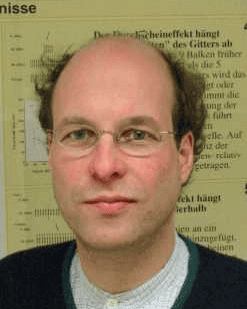
Frank Tong is a Centennial Professor of Psychology and Professor of Ophthalmology and Visual Sciences at Vanderbilt University. He completed his PhD studies at Harvard University (1995-1999) working with Ken Nakayama and Nancy Kanwisher. His early research capitalized on functional MRI to investigate the neural bases of face processing and visual awareness, followed by the development of novel techniques to decode feature-selective responses from the human visual cortex to characterize their role in attentional selection and visual working memory. In recent years, he has been captivated by noteworthy similarities and striking divergences between the human visual system and current deep neural network models. His research has been recognized by YIA awards from the Vision Sciences Society, Cognitive Neuroscience Society, and the Troland Award from the National Academy of Sciences. Frank has previously served on the VSS Board of Directors and currently serves on the NIH Neuroscience of Basic Visual Processes study section panel.

Michael F. Bonner

Johns Hopkins University

Mick Bonner is an Assistant Professor of Cognitive Science at Johns Hopkins University, where he leads the Cognitive Neuroscience & Deep Learning Group. His work uses computational methods, including deep neural networks and advanced statistical techniques, in combination with neuroimaging and behavioral studies to understand the visual system of the human brain. The goal of this work is to identify the statistical principles that govern the representations of visual cortex and to build theoretically grounded models of how these representations are computed from sensory inputs. Before joining the Cognitive Science Department at Johns Hopkins, Mick completed a PhD in Neuroscience and a postdoctoral fellowship at the University of Pennsylvania.

Kohitij Kar

York University

Kohitij Kar is an Assistant Professor at the Department of Biology in the Faculty of Science at York University, Toronto, Canada. Dr. Kar is also a Canada Research Chair in Visual Neuroscience. Dr. Kar was named one of the Future Leaders in Canadian Brain Research in 2022. Prior to this, Dr. Kar was a Research Scientist at the McGovern Institute for Brain Research at MIT, working in the lab of Dr. James DiCarlo. Before joining the DiCarlo Lab, he completed his Ph.D. in the Department of Behavioral and Neural Sciences at Rutgers University in New Jersey (PhD advisor: Bart Krekelberg) in 2015. Dr. Kar’s research lies at the intersection of neurophysiological investigations of visual intelligence in non-human primates and artificial intelligence systems. His work has been published in top-tier neuroscience journals like Science, Nature Neuroscience, and Neuron and competitive machine learning conferences like NeurIPS and ICLR. Dr. Kar has also recently become an SFARI investigator after receiving a Simons Foundation grant to develop a non-human primate model of autism.

Akihito Maruya

State University of New York

Akihito Maruya is a PhD student with Qasim Zaidi at the SUNY Graduate Center for Vision Research in NYC and Chair of the VSS Student-Postdoc Advisory Committee. He studies 3D perception in scenes and pictures, perception of rigid and non-rigid 3D objects, and form distortions perceived by adult and children amblyopes, using psychophysics and computational models.

2025 Pre-Data-Collection Poster Session

Saturday, May 17, 2025, 2:45 – 6:45 pm, Banyan Breezeway
Monday, May 19, 2025, 8:30 am – 12:30 pm, Banyan Breezeway

Organizers: Sabrina Hansmann-Roth, University of Iceland; Bjoern Joerges, York University; William Ngiam, University of Chicago; Yong Hoon Chung, Dartmouth College

It is customary for conference posters to contain at least preliminary results – that is some data has to have been collected. However, criticism and suggestions with regards to the experimental design – a major benefit of poster sessions – would be most helpful before data collection has even started. Receiving feedback at an early stage in research promotes rigorous and impactful science by helping researchers identify confounds, hidden assumptions, or even learn of issues with past attempts before it is too late, cutting down on research waste and enabling suggested changes being implemented to their experiments. This mirrors one of the key advantages of Open Science initiatives like Registered Reports, which adds peer scrutiny of a preregistration before data is collected. Following the positive response to our last two editions, we are organizing another pre-data-collection poster session at VSS2025.

If you are interested in presenting a poster at this session, please submit your proposal via this Google Forms. Registration for this event will be just-in-time, with a May 2nd deadline for abstract submissions, and authors will be notified of acceptance by May 5th. Those selected will be asked to prepare a conference poster which focuses heavily on the theoretical background of the study, and their proposed study methods. Attendance will be capped at a number of 28 participants and spots will be granted on a first come, first serve basis. If you have questions, you can email Bjoern (bjoerges at yorku.ca) or Sabrina (sabrina at hi.is).

We are aware that, under an adversarial, competitive – dare I say capitalist – view of academia, this event may place presenters in a vulnerable position – participation publicizes research ideas without allowing them to formally lay claim through a publication. We encourage poster viewers to be mindful, using this event to establish collaboration with presenters and improve science. We will be creating an Open Science Framework Meetings page if presenters wish to upload their pre-data posters, providing a verification and timestamp of their research proposals. However, ultimately if you are worried about getting scooped, presenting your idea at this event might not be the right decision for you.

!!!!UPDATE!!!!: You can download the abstract booklet here:

Navigating International Research Funding

Sunday, May 18, 2025, 1:00 – 2:00 pm, Banyan/Citrus

Organizers: MiYoung Kwon (VSS Board of Directors) and Paola Binda (VSS Board of Directors)
Moderator: Paola Binda, University of Pisa
Discussants: Constantin Rothkopf, Technical University of Darmstadt; Michael Herzog, EPFL – École polytechnique fédérale de Lausanne; Frans Verstraten, The University of Sydney.

Exploring Funding Landscapes Across Europe, the UK, Switzerland and Australia

This workshop offers an opportunity to hear how researchers around the world navigate research funding opportunities through country-specific and international mechanisms. The comparison of different systems will provide context and highlight the diversity of funding environments. With a focus on major funding bodies in Europe, the United Kingdom, Switzerland and Australia, the session will provide strategic insights into securing competitive research grants and fostering global research collaborations.

Constantin Rothkopf

Technical University of Darmstadt

Constantin Rothkopf is director of the Center for Cognitive Science and Professor at the Institute of Psychology with a secondary appointment in the Computer Science Department at the Technical University of Darmstadt. He did a joint PhD in Brain and Cognitive Sciences and Computer Science at the University of Rochester with Mary Hayhoe and Dana Ballard. His research investigates how vision, cognition, and action are intertwined in naturalistic, extended sequential visuomotor behavior, including tasks such as food preparation and navigation. His research methods involve both behavioral studies, often tracking body and eye movements, and computational modeling, often using probabilistic control models, including developing inverse models in machine learning. His work has been published in journals like Nature Communications and PNAS and machine learning conferences like NeurIPS, and AAAI. He has acquired multiple grants including an ERC Consolidator Grant for his project “ACTOR”.

Michael Herzog

EPFL – École polytechnique fédérale de Lausanne

Michael Herzog studied Mathematics (1992), Biology (1992), and Philosophy (1993) at the Universities of Erlangen, Tübingen, and at MIT. In 1996, he earned a Ph.D. in biology from the University of Tübingen. He was a post-doc at Caltech (1998-1999) and a senior researcher at the University of Bremen (1999-2004). Since 2004, he is the head of the Laboratory of Psychophysics at the EPFL in Switzerland hosting its own EEG, TMS, eye tracking, behavioral and computer simulation platforms.


Frans Verstraten

The University of Sydney

Frans Verstraten is the current McCaughey Chair of Psychology at the University of Sydney. A VSS board member from 2010-2015 and VSS president in 2013-2014. He studied Experimental Psychology at the Radboud University in Nijmegen and obtained his PhD from Utrecht University (1994). After positions in Canada (McGill, UToronto), USA (Harvard) and Japan (ATR), he became a full professor at Utrecht University in 2000 until his departure to Sydney in 2012. He is one of the editors-in-chief of the journals Perception and iPerception and has successfully written several grants, where the Pioneer Grant (about 2 million US$) by the Netherlands Organisation for Scientific Research was the most prestigious. He has served as a member of grant funding committees in several countries.

Paola Binda

University of Pisa

Paola Binda is associate professor at the University of Pisa, Italy. She trained in Milano (PhD) and Seattle (post-doc), in the fields of active vision and plasticity. Her research is mainly funded by the European Research Council (ERC Starting grant “Pupiltraits”, 2019-2024; ERC Consolidator grant “PredActive”, ongoing). As a trainee, she benefited from a Marie Sklodowska Curie “Global Fellowship”; as faculty, she is member of a recently funded Marie Sklodowska Curie “Doctoral Network” supporting coordinated PhD programs across multiple European institutions.

2025 Elsevier/VSS Young Investigator Award – Leyla Isik

Monday, May 19, 2025, 12:30 – 2:30 pm, Talk Room 2

The Vision Sciences Society is honored to present Leyla Isik with the 2025 Elsevier/VSS Young Investigator Award.

The Elsevier/VSS Young Investigator Award, sponsored by Vision Research, is given to an early-career vision scientist who has made outstanding contributions to the field. The nature of this work can be fundamental, clinical, or applied. The award selection committee gives highest weight to the significance, originality and potential long-range impact of the work. The selection committee may also take into account the nominee’s previous participation in VSS conferences or activities, and substantial obstacles that the nominee may have overcome in their careers. The awardee is asked to give a brief presentation of her/his work and is required to write an article to be published in Vision Research.

Leyla Isik

Clare Boothe Luce Assistant Professor, Department of Cognitive Science, Johns Hopkins University

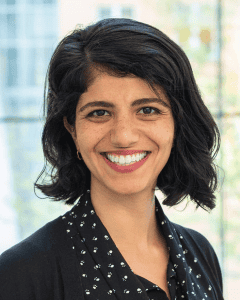
The 2025 Elsevier/VSS Young Investigator Award goes to Professor Leyla Isik for her important contributions to the scientific study of social vision. Dr. Isik is the Clare Boothe Luce Assistant Professor in the Department of Cognitive Science at Johns Hopkins University. After completing her undergraduate degree in Biomedical Engineering at Johns Hopkins, Dr. Isik earned her PhD with Tomaso Poggio at MIT and then conducted postdoctoral research at MIT and Harvard Medical School with Nancy Kanwisher and Gabriel Kreiman in the Center for Brains, Minds, and Machines.

Dr. Isik uses a broad array of neuroscientific and computational methods to study how humans recognize and understand social information from visual input, with a focus on action and social-interaction recognition. In her postdoctoral research, she identified a region in the human superior temporal sulcus (STS) that is selectively engaged when viewing others’ social interactions. Since starting her lab, she has shed new light on these neural processes during natural viewing, showing that social-interaction recognition relies on hierarchical visual computations similar to those used in scene and object recognition but with an additional reliance on dynamic and relational information. Another line of research in her lab has demonstrated how integrating these insights from human cognition can help build better, human-aligned AI vision models. Dr. Isik has received awards and funding from the NIH, NSF, and Google, and she is a dedicated mentor to students and postdocs in her lab. Dr. Isik’s innovative and rigorous research expands vision science into exciting new domains in social cognition.

Seeing social interactions

Humans see the world in rich social detail. We effortlessly recognize not only objects and people in our environment, but also social interactions between people. The ability to perceive and understand others’ interactions is critical to function in our social world, yet the underlying neural computations remain poorly understood. In this talk, I will first argue that social interaction perception should be studied with the same computational vision tools that are now widely applied to other areas of vision, like scene and object recognition. I will then present research from our lab using naturalistic neuroimaging and behavior to show that social interaction information is extracted hierarchically by the visual system along the recently proposed lateral visual pathway. However, unlike scene and object recognition, current AI vision models do a poor job of matching human behavior and neural responses to these dynamic, social scenes. Finally, I will describe our efforts to close this gap by instantiating insights from human social vision into novel neural network models. Together, this research suggests that social interaction recognition is a core human ability that relies on specialized, structured visual representations.

Dr. Isik will speak during the Awards session.

2025 Davida Teller Award – Jody Culham

Monday, May 19, 2025, 12:30 – 2:30 pm, Talk Room 2

The Vision Sciences Society is delighted and honored to award the 2025 Davida Teller Award to Dr. Jody Culham, a distinguished leader whose groundbreaking research has significantly advanced our understanding of how perception and action are integrated in the human brain.

Congratulations to Jody Culham, the thirteenth recipient of the Davida Teller Award. The Teller Award was created to honor the late Davida Teller’s exceptional scientific achievements, commitment to equity, and strong history of mentoring. The award is given to a female vision scientist in recognition of her exceptional, significant, or lasting contributions to the field of vision science.

Jody Culham

Professor of Psychology, Tier 1 Canada Research Chair in Immersive Neuroscience at Western University, Ontario

Dr. Jody Culham is a Professor in the Department of Psychology at Western University, Ontario, where she holds a prestigious Tier 1 Canada Research Chair. After earning her PhD at Harvard University under the guidance of Drs. Patrick Cavanagh and Nancy Kanwisher, she completed postdoctoral research with Dr. Mel Goodale at Western. From the outset, Dr. Culham’s innovative approach—combining psychophysics, neuropsychology, and neuroimaging— and direct pursuit of questions of lasting importance, have profoundly reshaped the field.

Dr. Culham was among the first to develop creative functional magnetic resonance imaging (fMRI) paradigms that allowed real-world objects and actions to be studied with neuroimaging. This methodological breakthrough has been a keystone in her approach of “immersive neuroscience”, now expanding to include virtual reality and video games. The approach has significantly advanced cognitive neuroscience by demonstrating how real-world interactions elicit distinct and more robust neural responses compared to traditional proxies like static images and simulated actions. Her foundational studies of the human parietal cortex have illuminated its critical role in planning and executing visually guided actions.

Beyond her substantial scientific achievements—including more than 100 influential publications, over 14,000 citations, and numerous prestigious awards such as the E.W.R. Steacie Memorial Fellowship—Dr. Culham is celebrated as a truly masterful mentor. Throughout her career, she has trained numerous graduate students and postdoctoral researchers who have progressed into influential positions in academia and industry. Known for her unwavering support, clear and approachable teaching style, and personal warmth, she has significantly influenced the lives and careers of her trainees. Her widely used educational resources, notably her internationally acclaimed website “fMRI for Newbies,” have provided invaluable guidance to countless early-career researchers worldwide.

Jody Culham has also gone above and beyond for the good of the broader vision sciences community. A dedicated member of the Vision Sciences Society since its inception, she has served in many capacities including Board Member and President, demonstrating outstanding leadership during critical periods, such as guiding the society back to successful in-person meetings post-pandemic. Her extensive contributions extend to other prominent organizations, including roles with the Organization for Human Brain Mapping and editorial positions at eLife and Experimental Brain Research. Jody’s generosity, infectious enthusiasm, and commitment to scientific rigor and community-building epitomize the values represented by the Davida Teller Award.

The Vision Sciences Society is proud to award Dr. Jody Culham the Davida Teller Award in 2025, recognizing her groundbreaking contributions to vision science, her pioneering research methodologies, and her extraordinary dedication to mentorship and community leadership.

Dr. Culham will speak during the Awards session.

2025 Graphics Competition Winners

Each year, VSS holds a Graphics Competition to collect creative visual images related to the field of vision science, the Society, or the VSS meeting. There are two competitions, the Website Banner Competition and the T-Shirt Design Competition. Winning graphic images are featured on the website, program, signage, and t-shirts.

The Vision Sciences Society is pleased to recognize David Yu as this year’s winner of both the Website Banner Competition and the T-Shirt Design Competition.

Website Banner Competition

Winner: David Yu, Senses Lab, The University of Sydney, Australia

T-Shirt Design Competition

Winner: David Yu, Senses Lab, The University of Sydney, Australia

VSS 25th Anniversary Logo
T-shirt Back and Chest Images

This graphic design embodies the relationship between vision and our other senses, aiming to highlight the nature of visual perception. Inspired by my experiences at the Vision Sciences Society conference and the research we do in our Senses Lab, I wanted to create a visual representation that reflects the integration of sight, sound, touch, and cognitive processing.

3MT® Competition for Students and Postdocs

Monday, May 18, 2026, 2:00 – 3:00 pm, Offsite

This event is modeled after the well-known Three Minute Thesis (3MT®) competitions held at many universities worldwide. Participating Students and Postdocs will present a 5-minute summary (one slide) of your thesis work to an audience of eager high school students.

VSS will provide transportation to and from the high school for participants.

The audience will vote to choose their favorite, and the winning presenter will win $200!

Who can participate?

Any current graduate student who is working on a dissertation, or any current postdoctoral trainee or postdoctoral research associate who has completed their dissertation, is eligible provided you are registered to attend VSS 2026.  

Does the work I describe have to be my dissertation?

Yes, just like in the Three Minute Thesis® competitions held worldwide. The work may be in progress and your slide can describe preliminary results. 

One slide? 3 minutes?

We’re going to keep to the one-slide policy of 3MT®, but we’ll give you up to 5 minutes.

I already participated in a 3MT® competition. Can I apply to join this event and can I use the same slide?

Yes! In fact, we encourage those who already have their slide ready to apply to join this event.

Where can I find out more about a 3MT®-style slide? Can I see examples?

The 3MT® was developed by the University of Queensland, Australia. Official 3MT® competitions occur worldwide. There is plenty of information on the 3MT® website

What are the benefits?

You benefit and the community benefits. You benefit from the opportunity to explain the essence of your work to an attentive audience who are not experts in your field. The presentations will be followed by opportunities to meet the students in small groups and talk to them about your path: Why did you decide to study vision? How did you prepare? Did you face special challenges? The students attending benefit from the chance to learn something about vision and to be inspired by your example.

OK I’m in. How do I apply?

Send one PDF file containing:

·     Full contact information (name, email, phone, current address)

·     Name of your current research supervisor

·     Name of your doctoral research supervisor (if different)

·     Date your Ph.D. was earned or expected

·     Institution that awarded or is awarding the Ph.D.

·     Your slide (PDF, PPT or Keynote)

The name of the PDF file should be YOURLASTNAME_YOURFIRSTNAME_3MTEXPO.pdf.  Send it to VSS by the deadline of April 29, 2026.  In the event VSS receives too many submissions to evaluate in the allotted time, preference will be given to those who submitted earliest.

The slide you send need not be the final version. If you are selected you will have the opportunity to get some feedback and revise if needed. In particular, strive to design your slide and your talk to reach THIS audience: high school students who don’t know any vision science and don’t know our jargon or why we do what we do nor why it’s important and useful.

Can I attend the event if I’m not speaking?

Unfortunately, the audience will be limited to the high school students and their teachers and the ten VSS participants. The venue will not have room for additional people. 

Will there be virtual options?

The event is in-person only.

Will I get some recognition for participating?

Yes. VSS will acknowledge your participation with a letter from the Board of Directors.

Questions?

Email VSS.

2025 Ken Nakayama Medal for Excellence in Vision Science – J. Anthony Movshon

Monday, May 19, 2025, 12:30 – 2:30 pm, Talk Room 2

The Vision Sciences Society is honored to present J. Anthony Movshon with the 2025 Ken Nakayama Medal for Excellence in Vision Science.

The Ken Nakayama Medal is in honor of Professor Ken Nakayama’s contributions to the Vision Sciences Society, as well as his innovations and excellence in the domain of vision sciences.

The winner of the Ken Nakayama Medal receives this honor for high-impact work that has made a lasting contribution in vision science in the broadest sense. The nature of this work can be fundamental, clinical or applied.

J. Anthony Movshon

University Professor and Silver Professor; Professor of Neural Science and Psychology; Professor of Ophthalmology and of Neuroscience and Physiology, and Investigator, Neuroscience Institute (NYU School of Medicine)

Tony Movshon has been selected as this year’s recipient of the Ken Nakayama Medal for Excellence in Vision Science. This honor recognizes his singular synthesis of the three primary strands of modern vision research—psychophysics, physiology and computational theory—and tireless leadership of the vision science community. Tony is known for foundational research transforming our understanding of the mechanisms representing the form, texture, and motion of objects, how these mechanisms contribute to perceptual judgments and guidance of actions, and how visual experience influences development of these mechanisms. His quantitative analysis of the linearity of simple and complex receptive fields led to formal insights like normalization. His investigation of the nature of motion transparency and coherence led to a cascade model explaining visual appearances. His rigorous use of signal detection theory linked physiological measurements to psychophysical judgments and gaze control. His pioneering studies of visual system development under normal and deprived conditions supported clinical insights into amblyopia.

Tony is also recognized as an exceptionally impactful mentor and role model, who has trained dozens and influenced generations of scientists. Tony’s contributions to the vision science community have been amplified by his service on countless scientific editorial boards and grant review committees and by his role advising, among others, the McKnight Endowment Fund for Neuroscience, the Simons Foundation, the Kavli Institute for Systems Neuroscience, the Gatsby Computational Neuroscience Unit, and the Max Planck Society. He established the Center for Neural Science at NYU, the Cold Spring Harbor Laboratory summer course Computational Neuroscience: Vision, and the Annual Review of Vision Science. He was elected to the Board of Directors of VSS in 2007 and served as President.

Tony earned a B.A. at Cambridge University in 1972 and continued there to earn a Ph.D. under the supervision of Colin Blakemore in 1975. Since 1975 he has been a faculty member at New York University. Tony’s research contributions have been recognized by the Young Investigator Award from the Society for Neuroscience, the Rank Prize in Optoelectronics, and the Champalimaud Vision Award. He has been elected a Fellow of the American Association for the Advancement of Science and of the Association for Psychological Science and member of the National Academy of Sciences, the American Academy of Arts and Sciences, and the Royal Society of London.

2025 US Workshop

Open Science and Publishing

Saturday, May 17, 2025, 12:45 – 2:15 pm EDT, Banyan/Citrus

Organizers: Noah Britt (McMaster University); Victoria Jacoby, (Brigham and Women’s Hospital, Harvard Medical School); and Jes Parker (University of Tennessee-Knoxville)
Moderator: Geoffrey Boynton (University of Washington)
Speakers: Kirsten Adam (Rice University); Dennis Levi (University of California, Berkeley); Ming Meng (South China Normal University); Philipp Musfeld (University of Zurich)

The VSS-SPC invites you to a panel discussion on the role of open science in vision research and academic publishing. Invited speakers will explore the principles of open science—why it matters, how to implement it, and its impact on research transparency and reproducibility. We will also have additional speakers that will share and discuss how open science practices influence publishing and editorial processes in top peer-reviewed journals. The session will conclude with a valuable 30-minute Q&A, giving attendees the opportunity to engage directly with all our well-esteemed speakers. Join us for an insightful discussion on navigating open science, publishing high-quality research, and shaping the future of scholarly communication.

Kirsten Adam

Rice University

Kirsten Adam is an Assistant Professor of Psychological Sciences at Rice University. Her work uses neural methods (EEG, fMRI) and behavior to characterize fundamental constraints on visual attention and working memory. Dr. Adam earned a B.S. in Biological Sciences at the University of Notre Dame, an M.S. in Cognitive Neuroscience at the University of Oregon, and a Ph.D. in Cognitive Psychology at the University of Chicago. Website: https://adamlab.rice.edu/
 

Dennis Levi

University of California, Berkeley

Dennis M. Levi is an American Professor at the University of California, Berkeley with appointments in the Herbert Wertheim School of Optometry & Vision Science, and the Helen Wills Neuroscience Institute. He received his diploma in Optometry in 1967 from the Witwatersrand School of Optometry, in Johannesburg, South Africa. His research focuses on how we see form and depth, and how these are impacted by abnormal early visual development, particularly amblyopia and strabismus. He has published more than 300 scientific papers and two books. His work has been cited almost 30,000 times and he has an h-index of 87 (Google Scholar). His research has been funded by the National Eye Institute (NEI) since 1976.

Ming Meng

South China Normal University

Ming Meng earned his Ph.D. from Princeton University, completed postdoctoral training at MIT, and was a faculty member at Dartmouth College. He currently holds a Pearl River Scholar Distinguished Professorship at South China Normal University, and serves for the Board of Reviewing Editors (BRE) of eLife as well as a Consulting Editor for Visual Cognition. His lab explores the neural mechanisms underlying visual cognition and attention, both with and without visual awareness. These mechanisms are linked to activity within the broader visual processing and attentional neural networks, spanning the occipital, temporal, and parietal lobes in both hemispheres. His research sheds light on normal behavioral patterns and enhances our understanding of neurological disorders.

Philipp Musfeld

University of Zurich

Philipp Musfeld is a postdoctoral researcher at the University of Zurich. He employs behavioral, computational, and neural methods (EEG) to investigate the information exchange between visual working memory and long-term memory. Parts of his work also concern the improvement of theory development, methodologies, and scientific practice in psychological research. Dr. Musfeld earned a B.S. in Psychology at the University of Cologne, an M.S. in Psychology at the University of Bonn, and a PhD in Cognitive Psychology at the University of Zurich.

Website: https://www.psychology.uzh.ch/en/areas/nec/allgpsy/team/postdoc/pmusfeld.html

Geoffrey Boynton

University of Washington

Geoffrey Boynton, is a VSS Board Member and studies visual attention, reading and prosthetic vision. After studying mathematics at U.C. San Diego and U.C. Santa Barbara, Dr. Boynton received a PhD in Psychology and Cognitive Sciences at U.C. Santa Barbara in 1994. After a decade at the Salk Institute in La Jolla, CA, he joined the faculty at the University of Washington. In 2019 led an effort to develop a research MRI facility at the new Center for Human Neuroscience in the Department of Psychology which he now directs. He also teaches courses on visual perception and statistics.

Vision Sciences Society