
VSS board members Krystel Huxlin and Anya Hurlbert will be stepping down this year. Four candidates, nominated by the membership and selected by an independent Nominating Committee, will compete in pairs for the two open positions.
Each newly elected Director will serve a four-year term on the VSS Board of Directors. Responsibilities of the Board include scheduling the Annual Meeting, implementing and monitoring VSS policies and budget, fundraising, and other VSS-related activities.
How to Vote
Log in to your MyVSS Account. In the 2026 Board of Directors Election section, click the Vote button.
You must be a current Regular or Postdoc Member to vote. Other membership types will not see the 2026 Board of Directors Election section on their account home page.
Voting closes April 24, 2026 (11:59 pm latest time zone on earth).
Candidates for Position One
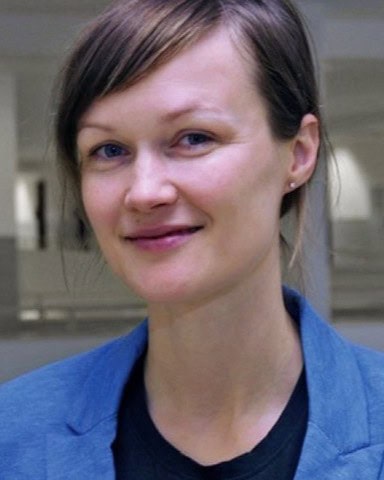
Katja Dörschner
Justus Liebig University Giessen Website
Katja Dörschner received her PhD in 2006 in Experimental Psychology from New York University, USA. After a post doc period at the University of Minnesota, she started a position as Assistant Professor at Bilkent University, Türkiye, in 2008. In 2014 she received a Humboldt Foundation Sophie Kovalevskaja Award and funding to move to Giessen and establish a research group at the Justus Liebig University (JLU). At JLU she was appointed Professor in 2019. She is currently coordinating a European Marie Skłodowska Curie Doctoral Network focusing on the ‘Perception of materials, objects and spaces through active EXPLORAtion’ (EXPLORA). In her research, Dr. Doerschner combines psychophysics with tracking methods, computational approaches, virtual reality, and fMRI to uncover and understand the mechanisms that enable humans to perceive intrinsic object qualities, such as material and shape.
My Vision for VSS
I will support VSS in continuing to be a community where scientific excellence, methodological rigor, and the highest ethical standards form the foundation of every endeavor. I am committed to promoting VSS’s friendly, inclusive atmosphere, which empowers members at all career stages to collaborate openly, share ideas without restraint, and feel welcomed regardless of background. I aim to advance VSS’s science communication efforts so that our discoveries reach and enrich society, creating a reciprocal relationship in which our research not only pushes the frontiers of vision science but also gives back to the public that supports us.
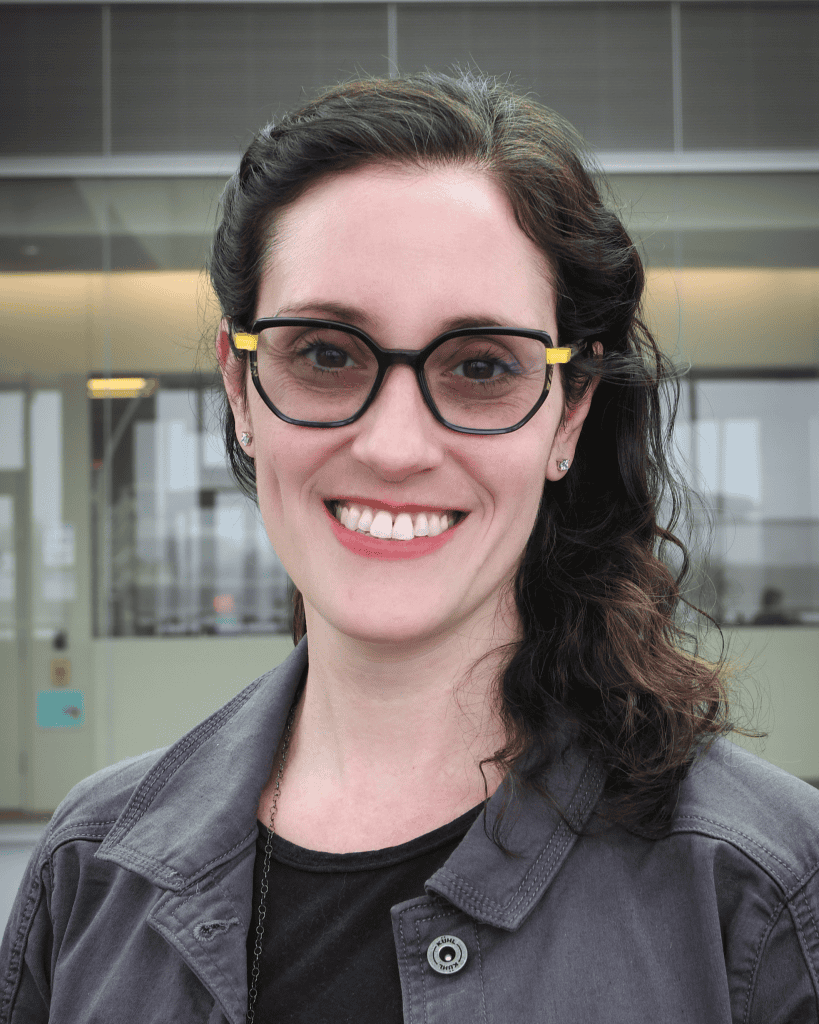
Karen Schloss
University of Wisconsin-Madison Website
Karen Schloss is an Associate Professor in the Department of Psychology and the Wisconsin Institute for Discovery at the University of Wisconsin-Madison. She directs the Visual Reasoning Lab and serves as the Associate Chair of Undergraduate Studies in Psychology. Karen received her BA in Psychology from Barnard College, her PhD in Psychology from the University of California, Berkeley with Stephen Palmer, and continued in Berkeley as a Postdoc before becoming an Assistant Professor of Research at Brown University. In 2016, Karen joined the faculty as an Assistant Professor at UW-Madison. Her research investigates how people interpret meaning from visual features, focusing on color and perceptual organization, with the goal of making visual communication more effective and efficient. Her work has been funded by multiple grants from the National Science Foundation, including an NSF CAREER award in 2018. She was awarded the Steve Yantis Early Career Award from the Psychonomic Society and served as an Associate Editor at the Journal of Experimental Psychology: General from 2022-2024.
Karen is deeply committed to serving the Vision Science community. She co-founded Females of Vision et al. (FoVea) in 2015, which aims to increase the visibility, impact, and success of women in vision science, while creating opportunities for everyone who seeks to participate in the field of Vision Science (indicated by the “et al.”). She has held leadership roles in FoVea since its inception. In 2021 she co-founded Mentoring Envisioned in partnership with other members of FoVea, SPARK, and Visibility to develop a community of near-peer mentoring and increase inclusivity within the VSS. She has also served on the VSS Diversity and Inclusion Advisory Board since 2021, the VSS Abstract Review Committee since 2022, and the Demo Night committee from 2014-2020 and 2023. Extending outside of VSS, Karen is currently the President of the Configural Processing Consortium, which unites scientists studying configural/holistic perception and cognition, with an emphasis on perceptual organization. Karen has attended every VSS for the past 20 years, and is driven to support the continued success of the society and its members.
My Vision for VSS
I view the interdisciplinary nature of VSS as a unique strength of the society and I would seek opportunities to continue fostering this strength. In recent years, there has been a surge in efforts to further build our interdisciplinary community through dedicated workshops such as PhiVis (Philosophy of Vision Science) and VISxVISION (Vision Science and Data Visualization Research), and the new Applied Vision Science meeting. I will work towards increasing efforts to facilitate interdisciplinary discussion and collaboration, while ensuring the society continues to promote the evolution of the field and highlight new and emerging areas of research. I will also work to increase bridges between VSS and other vision-related professional societies (e.g., ARVO, ECVP, International Color Vision Society, Society for Philosophy and Psychology, IEEE Visualization) to broaden multi-way dialogues across disciplines.
At the same time, I will work to expand VSS’s ongoing efforts to build an inclusive and supportive community, in which all vision scientists have opportunities to participate and thrive. As an international society, there is a need to explore innovative ways to facilitate connection and participation without reliance on international travel. Toward this goal, VSS is already developing virtual events to take place in the months preceding and following the VSS Annual Meeting (e.g., Virtual Symposia, Meet the Professors, and Connect with Industry). I will help facilitate these plans while also partnering with FoVea, Visibility, SPARK, and the Student-Postdoc Advisory Committee (SPC) to develop online versions of their activities (e.g., FoVea Workshops, Visibility Gatherings, Mentoring Envisioned Insights near-pear mentoring, SPC Workshops) to ensure they advance science, build community, and support professional development in the online platform. I will also explore opportunities to link virtual VSS events with in-person activities situated in regional “hubs” around the world. It will be especially important to provide meaningful virtual opportunities for junior members of our community who are just beginning to build their professional networks, as forming new connections in virtual settings can be far more challenging than maintaining existing connections. To further increase participation, I will be committed to identifying and pursuing financial support for early career members to attend VSS and explore additional ways to highlight and amplify their work. Finally, as VSS is experimenting with a new venue in 2027, I will work with the society to evaluate the outcomes of VSS in Seattle and continue identifying venues and formats for VSS that will maximize participation and access.
Candidates for Position Two

Geoffrey Aguirre
University of Pennsylvania Website
Geoffrey Aguirre is a neurologist who studies human visual perception and neural representation, with a particular focus on clinical disorders. His work combines several techniques, including functional MRI, psychophysics, and advanced stimulus spectral control.
Geoffrey completed his MD and PhD—and subsequent clinical training—at the University of Pennsylvania. His early research examined the organization of extrastriate visual cortex for the representation of object categories, combining patient data with fMRI to study face, object, and topographical representation. He has studied the effects of congenital vision loss upon the structure and function of visual cortex, and helped develop an atlas of retinotopic organization tied to cortical surface topology. He is currently working to understand the mechanistic basis of discomfort from bright and flickering light (photophobia). These studies use spectral control of stimuli to target the melanopsin-containing ipRGCs, as well as measurements of the human visual diet.
Geoffrey has worked to support trainees throughout his career. He is the Associate Director of the UPenn Neurology residency program, is PI on training grants (a T32 and UE5), and is co-Chair of the Burroughs-Wellcome Foundation scientific advisory committee for career development awards. In 2023 he received the Graduate Medical Education Mentorship Award from the University of Pennsylvania School of Medicine. He is the past-Chair of the NBVP (formerly SPC) NIH study section. He is a Fellow of Optica and has served on the organizing committee of its Fall Vision Meeting. He is a former member of the editorial board of the Journal of Vision, and has served on the VSS abstract review committee for many years.
My Vision for VSS
My highest priority is ensuring that the annual meeting remains a place where vision scientists at all career stages are able to encounter and present high-quality, innovative research. It is essential that early-stage investigators have a strong role in shaping the content and direction of the meeting if the society is to remain impactful and relevant. I am also eager to build upon recent efforts to increase the relevance of the society to our scientific lives apart from a once-a-year meeting. Career development, industry and clinical alliances, and scientific advocacy are all areas in which the Vision Sciences Society may contribute to the work of our membership.
Cong Yu

Zhejiang University Website
Cong Yu received his BA in Psychology from East China Normal University in 1985 and his PhD in Psychology from the University of Louisville in 1995, mentored by Ed Essock. After postdoctoral training at the University of Houston with Dennis Levi and at UC Berkeley with Stanley Klein, he served as principal investigator at the Institute of Neuroscience, Chinese Academy of Sciences, and later as professor at Beijing Normal University and Peking University. He is now Professor of Psychology at Zhejiang University in Hangzhou, China.
Cong’s research follows two complementary lines. One uses human psychophysics to study visual perceptual learning and its applications, as well as letter recognition/crowding and perceptual organization. The other, more recent line uses two-photon calcium imaging and artificial neural networks to study population activity in the early visual cortex of awake macaques and its contribution to foundational psychophysical phenomena. Together, these two lines of work reflect his longstanding interest in how visual systems learn, organize, and represent information.
Cong has been a deeply committed member of the vision science community. He has served on the editorial board of Vision Research since 2006, co-founded the biennial International Workshop on Perceptual Learning, was a member of the VSS Abstract Review Committee from 2011 to 2021, chaired the organizing committee for the Asia-Pacific Conference on Vision (APCV 2013), and now serves on the VSS David Teller Award Committee. He values VSS as an international community that brings together researchers across approaches, career stages, and regions, and he is especially enthusiastic about supporting the next generation of vision scientists while helping the field continue to grow in openness, rigor, and global reach.
My Vision for VSS
My vision for VSS going forward is for it to continue growing as a truly international and interdisciplinary community for vision science. What makes VSS especially valuable is not only the quality of the science, but also the openness of the exchange and the sense of connection across different traditions, methods, and generations of researchers. I hope VSS will continue to nurture excellent science, encourage broader participation from around the world, and support the next generation of vision scientists as the field evolves.