
Allison Sekuler
McMaster University
 Allison Sekuler is Canada Research Chair in Cognitive Neuroscience, Professor of Psychology, Neuroscience & Behaviour, and Associate Vice-President and Dean of Graduate Studies at McMaster University, in Hamilton, Ontario. She received her B.A. with a joint degree in Mathematics and Psychology from Pomona College, and her Ph.D. in Psychology from the University of California, Berkeley. An outstanding teacher and internationally-recognized researcher, Dr. Sekuler has been recognized as an Alexander von Humboldt fellow and an Ontario Distinguished Researcher, and she was named one of Canada’s “Leaders of Tomorrow” in 2004. Her primary areas of research are vision science and cognitive neuroscience. Prof. Sekuler has served on numerous national and international boards in support of science, and is a former Treasurer and Member of the Board of Directors for the Vision Sciences Society. She is a passionate advocate for science outreach, frequently appearing in the media to discuss scientific issues, and currently representing the scientific community on the national Steering Committee for the Science Media Centre of Canada.
Vision and the Amazing, Changing, Aging Brain
Saturday, May 8, 2010, 10:00 – 11:30 am, Renaissance Academy of Florida Gulf Coast University
The “greying population” is the fastest growing group in North America. We know relatively little, however, about how aging affects critical functions such as vision and neural processing. For a long time, it was assumed that once we passed a certain age, the brain was essentially fixed, and could only deteriorate. But recent research shows that although aging leads to declines in some abilities, other abilities are spared and may even improve. This lecture will discuss the trade-offs in visual and neural processing that occur with age, and provide evidence that we really can teach older brains new tricks.
About the VSS Public Lecture
The annual public lecture represents the mission and commitment of the Vision Sciences Society to promote progress in understanding vision, and its relation to cognition, action and the brain. Education is basic to our science, and as scientists we are obliged to communicate the results of our work, not only to our professional colleagues but to the broader public. This lecture is part of our effort to give back to the community that supports us.
Jointly sponsored by VSS and the Renaissance Academy of Florida Gulf Coast University.


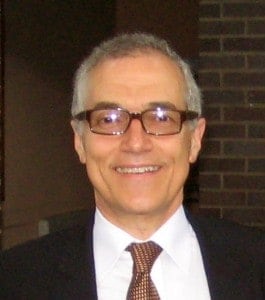
 Jeremy Wolfe became interested in visual perception during the course of a summer job at Bell Labs in New Jersey after his senior year in high school. He graduated summa cum laude from Princeton in 1977 with a degree in Psychology and went on to obtain his PhD in 1981 from MIT, studying with Richard Held. His PhD thesis was entitled “On Binocular Single Vision”. Wolfe remained at MIT as a lecture, assistant professor, and associate professor until 1991. During that period, he published papers on binocular rivalry, visual aftereffects, and accommodation. In the late 1980s, the focus of the lab shifted to visual attention. Since that time, he has published numerous articles on visual search and visual attention. He is, perhaps, best known for the development of the Guided Search theory of visual search. In 1991, Wolfe moved to Brigham and Women’s Hospital where he is Director of the Visual Attention Lab and of the Radiology Department’s Center for Advanced Medical Imaging. He is Professor of Ophthalmology and Radiology at Harvard Medical School.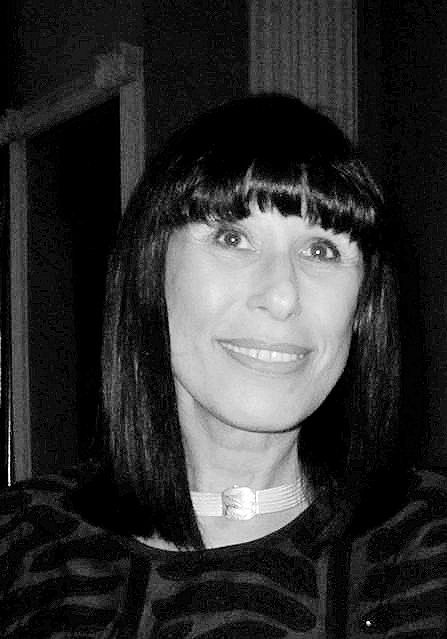



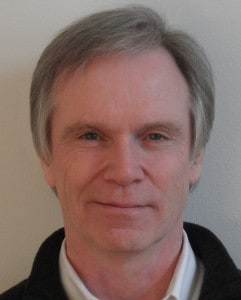 Patrick Cavanagh is the head of the Centre of Attention and Vision at the Université Paris Descartes and a Distinguished Research Professor at Dartmouth College. He received a undergraduate degree in Electrical Engineering from McGill University in 1968 and a PhD in Cognitive Psychology from Carnegie-Mellon University in 1972. He taught at the Université de Montréal from 1972 to 1989 and then at Harvard University from 1989 to 2008. Current projects study the roles of visual attention in selecting and creating visual representations, and the properties and strategies of visual attention in normal and brain damaged subjects. He has also explored the contribution of various features such as shadow, color, motion, and texture to representations of visual form and these experiments led to his interest in art as a source of data for neuroscience.