Public Lecture

Bevil Conway

Senior Investigator, Laboratory of Sensorimotor Research, National Institutes of Health

What is beauty?

Monday, May 18, 2026, 3:00 – 4:00 pm, Offsite

What is beauty and why does it move us? This lecture takes up one of philosophy’s oldest puzzles drawing on the latest findings in neuroscience and evolutionary biology to challenge popular reductive views of beauty as a fitness signal. I’ll argue instead that beauty is a cognitive achievement, made possible by the dramatically larger brain and cognitive potential of humans compared to other primates. Beauty, it turns out, is not a luxury or a distraction: it is the emotion the human mind feels when it is working at its very best.  

About our speaker

Bevil Conway is a neuroscientist and visual artist whose work often uses color as a playground to understand how mind and brain work. He has held positions at Wellesley College, MIT, and Harvard, where he was elected a Junior Fellow. His lab studies how the brain interprets information at the center of gaze, how learning transforms vision into concepts, and how these processes compare across cultures and species.  He is a frequent commentator in outlets including the New York Times, NPR, and WIRED, and gained his 15 minutes of fame for explaining the viral phenomenon #TheDress. His artwork explores the limits of visualization, the nature of representation, and ideas of process and beauty, working across media from glass-and-silk to etching and watercolor. His work is in the Boston Public Library and the Fogg Art Museum Rental Collection. He is the author of two forthcoming books: Color Coded (W. W. Norton, 2027) and The Creative Brain, co-authored with Alexander Rehding (Princeton University Press, 2027).

About the VSS Public Lecture

The annual public lecture represents the mission and commitment of the Vision Sciences Society to promote progress in understanding vision and its relation to cognition, action and the brain. As scientists we are obliged to communicate the results of our work, not only to our professional colleagues, but also to the broader public. This lecture is part of our effort to give back to the community that supports us.

Attending the VSS Public Lecture

Admission to the Public Lecture is free. Registration is required, link coming soon. The lecture will be held on Monday, May 18 at 3:00 pm at the Dalí Museum. Located at One Dalí Blvd., St. Petersburg, 33701.

The Dalí Museum is an approximately ten-mile drive from the TradeWinds Island Grand Resort. On-site parking is available for $10 on a first-come, first-served basis. There are also various surface lots, city parking garages and street parking as well as public transportation. Visit the museum website for more information.

2026 Awards Session

Monday, May 18, 2026, 12:30 – 2:00 pm, Talk Room 2

We are pleased to honor our awardees at the VSS 2026 Awards Session.

Davida Teller Award

T. Rowan Candy

Indiana University

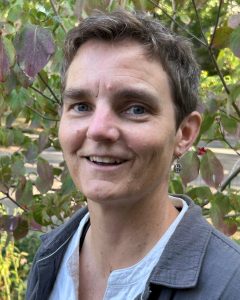
Congratulations to T. Rowan Candy, the 2026 recipient of the Davida Teller Award.

Ken Nakayama Medal for Excellence in Vision Science

Nancy Kanwisher

Walter A Rosenblith Professor of Cognitive Neuroscience, Department of Brain and Cognitive Sciences, Massachusetts Institute of Technology; Investigator, McGovern Institute

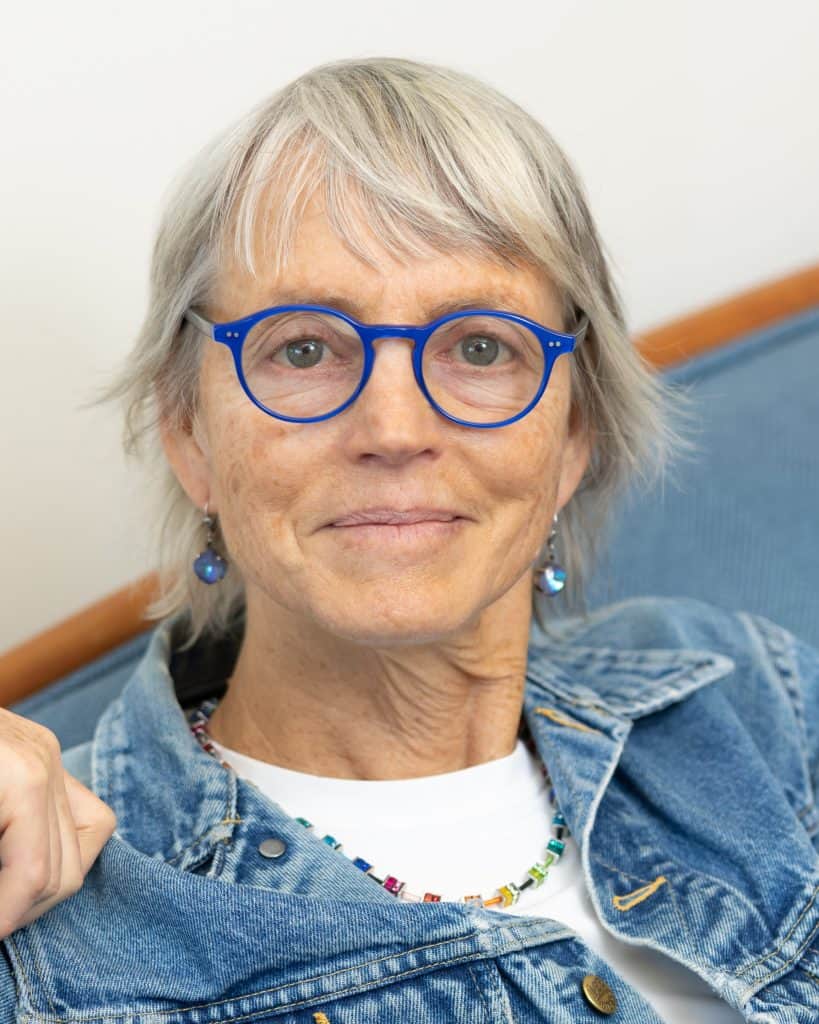
Congratulations to Nancy Kanwisher, the 2026 recipient of the Ken Nakayama Medal for Excellence in Vision Science.

Elsevier/VSS Young Investigator Award 

Ilker Yildirim

Assistant Professor, Department of Psychology, Yale University

Congratulations to Ilker Yildirim, the 2026 recipient of the Elsevier/VSS Young Investigator Award.

2026 Elsevier/VSS Young Investigator Award – Ilker Yildirim

Monday, May 18, 2026, 12:30 – 2:00 pm, Talk Room 2

The Vision Sciences Society is honored to present Ilker Yildirim with the 2026 Elsevier/VSS Young Investigator Award.

The Elsevier/VSS Young Investigator Award, sponsored by Vision Research, is given to an early-career vision scientist who has made outstanding contributions to the field. The nature of this work can be fundamental, clinical, or applied. The award selection committee gives highest weight to the significance, originality and potential long-range impact of the work. The selection committee may also take into account the nominee’s previous participation in VSS conferences or activities, and substantial obstacles that the nominee may have overcome in their careers. The awardee is asked to give a brief presentation of their work and is required to write an article to be published in Vision Research.

Ilker Yildirim

Assistant Professor, Department of Psychology, Yale University

The 2026 Elsevier/VSS Young Investigator Award goes to Professor Ilker Yildirim for his important contributions to the scientific study of visual perception and attention. Dr. Yildirim is an Assistant Professor in the Department of Psychology at Yale University. After completing his undergraduate and master’s degrees in Computer Science at Boğaziçi University in Turkey, Dr. Yildirim earned his PhD with Robert Jacobs in the Departments of Brain and Cognitive Sciences and Computer Science at the University of Rochester. He then conducted postdoctoral research with Josh Tenenbaum at MIT and Winrich Freiwald at The Rockefeller University.

Dr. Yildirim builds computational models of visual processing across multiple levels of analysis that he then tests in both rigorous psychophysical experiments and human and non-human primate neural data. Dr. Yildirim’s research stands out not only because of this careful integration of experimental and modeling approaches, but also because of the diverse computational approaches employed, including probabilistic programming, causal generative models, dynamical systems, and deep neural networks. Examples of recent work include the use of an inverse graphics model to explain the visual processing of faces and bodies, a novel adaptive computational account of attention, and intuitive physics models of the perception of liquids and soft objects such as cloth. Dr. Yildirim has received awards and funding from the NIH, NSF, and the Air Force Office of Scientific Research (AFOSR), and is renowned at Yale for his integrative Algorithms of the Mind course. Dr. Yildirim’s innovative and technically demanding multilevel research expands vision science into new and exciting directions.

How to model the mind simultaneously across the computational, algorithmic, and neural levels

In the history of neuroscience and psychology, we can, for the first time, discover complex algorithms of intelligence in concrete, computational terms. I will present my lab’s work, which advances these efforts by focusing on visual cognition, uncovering the computational logic and intermediate representations that transform images into rich representations of objects and scenes that we can think about and plan with. The overall theoretical core of this work is that visual cognition is fundamentally about building and manipulating ‘structure-preserving representations’ (SPRs) of the physical world, going beyond the task-optimized statistical representations featured in standard deep neural networks. I’ll present multilevel formulations of this core theory of SPRs, making contact with empirical measurements across levels of analysis, from dense psychophysics to single-cell electrophysiology. I’ll highlight our work in the domains of object perception, intuitive physics, and goal-driven attention. These studies blur the boundaries between between currently divergent modeling approaches of cognitive science (probabilistic/connectionist/dynamical systems), provide accounts of neural mechanisms that are simultaneously more interpretable and predictive than alternatives, and offer a way to synthesize task optimization and structure preservation.

2026 Ken Nakayama Medal for Excellence in Vision Science – Nancy Kanwisher

Monday, May 18, 2026, 12:30 – 2:00 pm, Talk Room 2

The Vision Sciences Society is honored to present Nancy Kanwisher with the 2026 Ken Nakayama Medal for Excellence in Vision Science.

The Ken Nakayama Medal is in honor of Professor Ken Nakayama’s contributions to the Vision Sciences Society, as well as his innovations and excellence in the domain of vision sciences.

The winner of the Ken Nakayama Medal receives this honor for high-impact work that has made a lasting contribution in vision science in the broadest sense. The nature of this work can be fundamental, clinical or applied.

Nancy Kanwisher

Walter A Rosenblith Professor of Cognitive Neuroscience, Department of Brain and Cognitive Sciences, Massachusetts Institute of Technology; Investigator, McGovern Institute

Nancy Kanwisher’s lasting contributions to vision science include her pioneering use of functional brain imaging to discover category-selective regions in the human visual cortex, for example the fusiform face area (FFA), parahippocampal place area (PPA), and extrastriate body area (EBA). These discoveries and more recent work that goes beyond vision to include domains such as language and theory of mind have advanced functional specialization as a core principle that shapes how we conceptualize neural information processing. Importantly, her work encompasses more than the delineation of specific brain areas and their response properties to provide in-depth characterization of the role they play in multiple aspects of perceptual, attentional, and cognitive processing. More recently, her interest in uncovering broad principles of brain organization has extended to computational approaches, including work demonstrating how functional specialization can emerge in network models trained to perform multiple distinct categorization tasks. In addition to her extensive scientific contributions, Kanwisher has been an exceptional mentor, inspiring and championing generations of vision scientists who have made important discoveries of their own.

Nancy Kanwisher received her B.S. and Ph.D. from MIT, under the supervison of Professor Molly Potter. She completed a postdoctoral fellowship as a MacArthur Fellow in Peace and International Security, and a second fellowship in the lab of Anne Treisman at UC Berkeley. She subsequently held faculty positions at UCLA and then Harvard, before returning to MIT in 1997, where she is now the Walter A. Rosenblith Professor of Cognitive Neuroscience in the Department of Brain & Cognitive Sciences at MIT. Kanwisher has received the Troland Award, the Golden Brain Award, the Carvalho-Heineken Prize, the Kavli Prize in Neuroscience, the António Champalimaud Vision Award, a MacVicar Faculty Fellow teaching award from MIT, and the Vision Science Society Davida Teller Award. She is a member of the National Academy of Sciences, a Fellow of the British Academy, and the American Academy of Arts and Sciences.

2026 Davida Teller Award – T. Rowan Candy

Monday, May 18, 2026, 12:30 – 2:00 pm, Talk Room 2

The Vision Sciences Society is delighted and honored to award the 2026 Davida Teller Award to Dr. T. Rowan Candy, whose mid-career contributions to vision science have bridged basic vision science, clinical translation, and modern quantitative methods to reshape how the field measures and explains both typical and atypical early visual development.

Congratulations to T. Rowan Candy, the fourteenth recipient of the Davida Teller Award. The Teller Award was created to honor the late Davida Teller’s exceptional scientific achievements, commitment to equity, and strong history of mentoring. The award is given to a mid-career vision scientist in recognition of their exceptional, significant, or lasting contributions to the field of vision science.

T. Rowan Candy

Indiana University

Dr. T. Rowan Candy is a Professor of Optometry and Vision Science at the Indiana University School of Optometry with adjunct roles in Psychological and Brain Sciences and IU’s Neuroscience and Cognitive Science programs. She currently serves as the Executive Associate Dean for Academic Affairs in the IU School of Optometry. She earned her Membership of the British College of Optometrists after completing her B.Sc. in Optometry at the University of Wales, Cardiff and then earned her Ph.D. in Vision Science from the University of California, Berkeley working with Marty Banks. She completed her postdoctoral work at the Smith-Kettlewell Eye Research Institute in San Francisco with Tony Norcia. The focus of Dr. Candy’s research program is studies of both typical and atypical visual development, with a view to preventing rather than trying to treat clinical conditions resulting in permanent vision loss such as amblyopia and common types of strabismus.

Dr. Candy is an internationally recognized vision scientist whose mid-career contributions over the past two decades have been exceptional in scope and impact. Her work has reshaped how the field measures, and therefore explains, early visual development. Dr. Candy’s contributions have given the field new tools, mechanistic data, and integrative frameworks for how infants achieve robust binocular visual experience, and why, in some children, those stabilizing mechanisms derail into strabismus and amblyopia. Her recent naturalistic and computational work extends these insights into infants’ everyday visual worlds in a direction already recognized as paradigm-shifting.

Dr. Candy’s record of mentorship is as distinctive as her scientific contributions, and it is especially aligned with the Davida Teller Award’s emphasis on mentoring and equity. Dr. Candy has built a training environment that deliberately bridges basic vision science, clinical translation, and modern quantitative methods. Within her institution, Dr. Candy is a beloved teacher, and her mentees have gone on to highly visible roles spanning academia, clinical leadership, and industry research. Dr. Candy has also been a proactive leader in promoting professional development and diversity in science, coordinating initiatives at her institution and for the field at large. She has been a dedicated member and leader in the VSS community, including serving as a Board member from 2021-2024.

Dr. Candy exemplifies what the Davida Teller Award was created to recognize: transformative, lasting scientific contributions paired with sustained excellence in mentorship and equity-aligned leadership.

The Vision Sciences Society is proud to award Dr. T. Rowan Candy the 2026 Davida Teller Award, recognizing her groundbreaking contributions to vision science, her pioneering research methodologies, and her extraordinary dedication to mentorship and community leadership.

Travel Grants Information

Each year VSS endeavors to support travel to and accommodation at the annual meeting through a travel grants program, subject to availability of funding. For 2026, we are pleased to announce funding from Elsevier/Vision Research, NIH/National Eye Institute and NSF. In addition, in 2022 VSS introduced the John I. Yellott Travel Award.

Guidelines for Applications

Travel grants are available to both US and non-US individuals and are open to Undergraduates, Post-bac researchers, Graduate Students and Postdocs.

Eligibility criteria are as follows:

NEI Travel Grant: Undergraduate students, Graduate students, and Postdocs. Must be US citizen or permanent resident in the US.

Elsevier/Vision Research International Travel Award: Graduate students, Postdocs. Must NOT be US citizen or permanent resident of the US.

Yellott Award: Graduate students, Postdocs. Any citizenship or residency.

NSF Undergraduate Travel Award: Undergraduate students. Must be US citizen or permanent resident in the US. These grants are available to undergraduates who are the first author on a regular submitted abstract or who intend to submit an undergraduate just-in-time poster submission.

Undergraduate Travel Award: Undergraduate students. Any citizenship or residency. VSS members may donate to the Undergraduate Travel Award fund.

Travel grants are intended to increase representation of the broad VSS membership, including individuals facing significant financial and personal obstacles to their attendance at our international conference. 

All applications will be evaluated on a balance of many criteria, including scientific quality of the submitted abstract and need.

Applicants must be the first author on an abstract at the 2026 meeting. Previous VSS travel award recipients are not eligible (2020 and 2021 award recipients excluded). 

Grants Selection

Applications will be reviewed by a committee appointed by the VSS Board of Directors.

Schedule

Intent to Submit Application (during abstract submissions): December 10, 2025
Applications Open: January 6, 2026 
Deadline to Apply: January 19, 2026
Recipients Announced: February 19, 2026 

YIA Committee

Members are appointed by the Board to a two-year term.

Nick Turk-Browne, Chair
Chris Baker
Patrizia Fattori
Alex Huk
Martina Poletti
Melissa Vo

Davida Teller Committee

Members are appointed by the Board to a three-year term.

Julie Golomb, Chair
Marlene Behrmann
Zhong-Lin Lu
Anna Montagnini
Cong Yu


25th Anniversary VSS Founders’ Awards

Monday, May 19, 2025, 12:30 – 2:30 pm, Talk Room 2

Congratulations to Drs. Ken Nakayama and Thomas Sanocki, the recipients of the VSS Founders’ Awards. These awards are presented in recognition of their roles in launching our Society and organizing the first several meetings that have now been held annually for the last 25 years.

Ken Nakayama

Professor Emeritus, Harvard University; Visiting Research Scientist at the University of California, Berkeley

Ken Nakayama has enjoyed a long, highly impactful career in vision science, dating back to his days as graduate student at UCLA, where his dissertation project used single-unit recordings to look for potential neural concomitants of visual masking in optic nerve fibers of the cat. Next, Ken pursued postdoctoral training at UC-Berkeley, where his mentors included legendary vision scientist Horace Barlow. To quote Ken, “Just Barlow’s example as a great scientist was all the mentoring I needed.” After his postdoc stint, Ken moved to the University of Newfoundland where he was an Assistant Professor of Neurophysiology. But after two years he concluded the fit wasn’t right, so he accepted a position at the Smith-Kettlewell Eye Research Institute in San Francisco where he remained for almost 20 years. It was during that period that Ken’s research transitioned to human psychophysics, an approach to vision science that allowed him to direct his creativity to the question of why we see things the way that we do. In 1990 Ken was recruited to the Psychology Department at Harvard University where he and faculty colleague Patrick Cavanagh created the Harvard Vision Sciences Lab, which quickly became populated by an impressive cadre of trainees and visiting vision scientists. Ken was appointed Edgar Pierce Professor of Psychology in 1998 and he served as Chair of the Psychology Department from 2011 to 2016. He is now Professor Emeritus at Harvard and Visiting Research Scientist at the University of California, Berkeley.

Ken’s research accomplishments are many and span multiple aspects of vision. To paraphrase VSS member Nancy Kanwisher, “Ken has made a lifetime of contributions to our understanding of mid-level vision, including work on visual search, visual attention, surface perception, stereo vision and its role in image segmentation, face perception including individual differences.” By Ken’s own admission, many of his most insightful studies emerged from the simple act of “just looking.” Ken was awarded the prestigious Tillyer Medal by Optica in 2017 for his unique formulations of visual surface perception. In that same year, he also was selected as the recipient of the Golden Brain Award given by the Minerva Foundation in recognition of his fundamental contributions to research in vision and the brain. Ken is an elected member of the American Academy of Arts and Sciences and of the Society of Experimental Psychologists. He has served on numerous advisory and editorial boards over the years.

Most notable for this citation, Ken is responsible for conceiving and creating our professional Society, devoted to understanding vision and its relation to cognition, action and the brain. That dream culminated in the establishment of VSS in 2000. In partnership with Tom Sanocki, Ken organized the first several meetings of VSS. He also negotiated arrangements with the Journal of Vision to publish VSS meeting abstracts, and he built the organizational structure and procured the support services that launched VSS on its remarkably successful trajectory. In 2016, VSS established the Ken Nakayama Medal given annually “to a vision scientist who has made exceptional, significant, or lasting contributions to vision science.”

For a detailed account of Ken’s successful journey as a vision scientist, read his engaging essay “Coming of Age in Science: Just Look” published in the Annual Review of Vision Science.

Thomas Sanocki

Professor Emeritus, University of South Florida

Tom Sanocki completed his undergraduate degree in 1980 at Northern Michigan University, with a major in Psychology and a Minor in Computer Science. His PhD was awarded in 1986 from the University of Wisconsin, Madison, in Cognitive Psychology; his dissertation was on the impact of structural regularity (i.e., visual knowledge) on letter recognition. In that same year, Tom joined the Psychology faculty at the University of South Florida (USF) as an Assistant Professor, rising to the rank of Full Professor in 1998, and recently transitioning to Professor Emeritus status.

Tom is an accomplished cognitive psychologist who is best known for his work on object/form perception, visual priming, perceptual grouping, scene perception and reading. He has published dozens of articles, chapters and commentaries, as well as a textbook on Statistics. At USF, he served as Director of the Cognitive & Neural Sciences Program, and he holds a U.S. patent for “Dynamic Reading Instruction.” At USF, he taught courses covering a range of topics including the creative brain, visual cognition, and art, design and psychology.

In 2000, Tom accepted Ken Nakayama’s invitation to help in launching the nascent Vision Sciences Society and in planning and organizing the first few VSS meetings (which they heroically accomplished on their own). Tom was able to secure support from USF to subsidize those first few VSS meetings. From the outset, Tom played a vital role ensuring that the program included sessions on topics with appeal to those working in visual cognition. When it became obvious that Ken and Tom’s vision was becoming a reality, they created a board of directors, with rotating membership, to oversee the meetings and other activities of VSS. As an inaugural board member, Tom brought wisdom and insight to the Board’s activities.

The efforts of these two founders proved successful, as evidenced by the rapid growth in VSS meeting attendance, the number and, particularly, breadth of session topics and by the rapid growth in the membership by vision scientists from all over the world. VSS is now proud to award Ken and Tom with the 25th Anniversary Founder’s Awards in recognition of their seminal roles in launching our highly successful Society.

Vision Sciences Society