
Monday, May 18, 2026, 2:00 – 3:30 pm, Banyan/Citrus
Organizers: Noah Britt, McMaster University; Victoria Jacoby, Harvard Medical School; and Molly McKinney, Texas A&M University
Moderator: Michael Landy, New York University
Speakers: Sarah Shomstein, George Washington University; Ruth Rosenholtz, NVIDIA Research; and Isabel Gauthier, Vanderbilt University
The VSS-SPC invites you to a 90-minute workshop and panel discussion that offers a behind-the-scenes look at the peer review and editorial decision-making process in academic publishing. This session blends the expertise of three speakers at different stages of the editorial hierarchy to provide complementary perspectives on how manuscripts are evaluated, reviewed, and ultimately published in leading peer-reviewed journals.
To begin, Dr. Isabel Gauthier will provide a general overview of the peer review process and the best approaches for review systems tailored toward early-career researchers. Then, Dr. Sarah Shomstein will discuss the broader vision of journal leadership, including how editors are selected, how standards for rigor and contribution are decided and upheld, and how the peer review process is valued and guided at the journal level. Finally, Dr. Ruth Rosenholtz will provide insight into the day-to-day realities of handling submissions, assigning reviewers, weighing reviewer feedback, making difficult editorial decisions, and navigating emerging challenges such as the use of AI in research and reviewing.
The workshop will conclude with an extended 30-minute Q&A, offering attendees the opportunity to engage directly with the panelists, ask practical questions, and gain clarity on how editorial decisions are made behind closed doors. This session is designed to demystify the publication process, inform researchers at all career stages, and foster a deeper understanding of how high-quality, impactful research is evaluated within scholarly journals.

Isabel Gauthier
Vanderbilt University
Dr. Gauthier received her doctoral degree from Yale in 1998, followed by concurrent post-doctoral fellowships at Yale and MIT, before taking a faculty position at Vanderbilt in 1999. She was named David K. Wilson Chair of Psychology in 2012, and is also Professor of Radiology and Radiological Sciences. Gauthier has received the Young Investigator Award, Cognitive Neuroscience Society in 2002, the APA Distinguished Scientific Award for Early Career Contribution to Psychology in the area of Behavioral/Cognitive Neuroscience in 2003 and the Troland research award from the National Academy of Sciences in 2008. She received a mid-career award from the Psychonomic Society in 2021 and the Davida Teller Award in 2024. In 2000, she founded the Perceptual Expertise Network, linking over ten laboratories across North America in collaborations until 2017. Gauthier uses behavioral and neural methods to study many aspects of object and face recognition, with a focus on the role of perceptual expertise in category-specific effects in domains such as faces, letters or musical notation, with implications for disorders likes autism and congenital face blindness. Her recent work addresses domain-general visual abilities for object recognition and ensemble perception. She has published more than 140 peer-reviewed articles. Gauthier was an Associate Editor at JEP:HPP from 2005 to 2011, Editor of JEP:General from 2011 to 2017 and Editor of JEP:HPP since 2017.

Sarah Shomstein
George Washington University
Dr. Shomstein has been on the faculty of the Department of Psychological and Brain Sciences since joining GWU in 2007. She received a B.S. in Psychology from Carnegie Mellon University in 1998 and a Ph.D. in Psychological and Brain Sciences from The Johns Hopkins University in 2003.
Professor Shomstein teaches courses on cognitive neuroscience, neural plasticity, and visual attention at both the undergraduate and graduate levels. Over the past 15 years, Professor Shomstein’s research has focused on elucidating neural mechanisms of brain functioning pertaining to visual processing and attentional selection. Research in her laboratory employs various methods ranging from neuroimaging techniques to working with brain damaged populations. Work in her laboratory is supported by grants from the National Institutes of Health (NIH) as well as the National Science Foundation (NSF). She regularly sits on various panels and study sections at both NIH and NSF, and she just wrapped up a 4 year term as the Editor-In-Chief of Attention, Perception & Psychophysics. Professor Shomstein is strongly committed to undergraduate research and she routinely mentors undergraduate and high school students.

Ruth Rosenholtz
NVIDIA
Ruth Rosenholtz joined NVIDIA Research in 2023, after a year as visiting scientist. Her research interests include behavioral experiments and computational modeling of human visual perception, and its applications. Ruth has participated in peer review as both an author and a reviewer for computer vision and image processing conferences and journals, and for human vision journals. She has served as an editorial board member for ACM Transactions on Applied Perception, Journal of Perceptual Imaging, and Journal of Vision. She still dislikes getting reviews back and asks her students and postdocs to read them to her in silly voices.
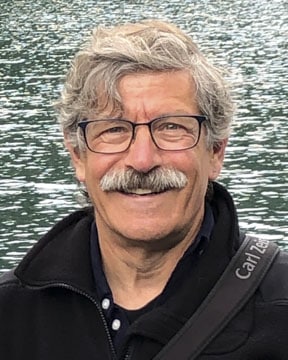
Michael Landy
New York University
Michael Landy is the current President of VSS (through the May meeting). He studies sensory cue integration, perception of depth, surface material properties and texture, perceptual decision-making and visual control of movement. He received a PhD in Computer and Communication Sciences from the University of Michigan in 1981 and has been at NYU ever since (first as a programmer and postdoc, and since 1984 as faculty in Psychology).