
Computational and Mathematical Models in Vision (MODVIS)Wednesday, May 11 – Friday, May 13 Organizers: Jeff Mulligan, NASA Ames Research Center; Zyg Pizlo, Purdue University; Anne Sereno, U. Texas Health Science Center at Houston; Qasim Zaidi, SUNY College of Optometry The 5th VSS satellite workshop on Computational and Mathematical Models in Vision (MODVIS) will feature extended oral presentations on quantitative modeling of a variety of visual processes. A keynote address will be given by Prof. Steve Zucker (Yale) on Thursday afternoon. The registration fee is $100 for regular participants, $50 for students. WorldViz Virtual Reality WorkshopSaturday, May 14, 12:45 – 2:00 pm, Talk Room 2 Organizer: Matthias Pusch, WorldViz Virtual Reality gets a lot of press lately, and releases about new hardware and software are coming out pretty much daily. This session will give an overview of recent trends and new technologies and discuss their use cases and limitations for research applications. “Individual Differences in Vision” Brown Bag LunchSunday, May 15, 12:45 – 2:00 pm, Talk Room 2 Organizers: Hrag Pailian1 and Jeremy Wilmer2; 1Harvard University, 2Wellesley College Third biennial IDV Brown Bag: A whirlwind tour of the breadth of individual differences related work currently being conducted by VSS members. The event features a series of “micro-talks” where speakers give 2-minute presentations on cutting edge research that ranges across a wide variety of content areas. Bring your lunch, meet fellow researchers, and experience the power of the individual differences approach to vision! Are there donuts in vision? Neural computation of global image configuration by a circular receptive field.Monday, May 16, 2:00 – 4:00 pm, Sawgrass Organizers: Naoki Kogo1, Bart Machilsen1, Michele Cox2, Vicky Froyen1; 1 Laboratory of Experimental Psychology, University of Leuven, Leuven, Belgium, 2Department of Psychology, Vanderbilt University, USA Discussants: The global visual context influences the processing of local image information in the visual system. Ample evidence for this claim comes from neurophysiological and psychophysical studies. This special interest/discussion meeting will explore plausible neural mechanisms that reflect the global configuration of an image, and the role of such a mechanism in Gestalt-like phenomena of figure-ground organization and shape representation. These phenomena demonstrate that long-range neuronal interactions modulate the coding of local image features in early visual areas. Border-ownership selective neurons, for instance, modulate their firing rate in response to the figural side of a boundary, which can only be derived from the global image context (1). To explain this mechanism, the existence of a “grouping cell” in a recurrent neural circuit has been suggested (2). From their functional role in the computation of border ownership some structural properties of these putative grouping cells have been proposed, such as a donut-shaped receptive field. The concept of a grouping cell has relevance for various lines of research: computational neuroscience, neurophysiology, and experimental psychology. This satellite event wants to facilitate cross-talk between these disciplines by approaching this putative grouping cell from different angles. For instance, the collective activities of grouping cells can result in a “medial axis” representation, similar to the skeleton-type of shape coding developed in computer vision science (3). Also, the pattern of oriented edges in natural images has revealed a co-circular organization of luminance boundaries (4), likely due to the presence of object boundaries (5). Neurophysiological data further hint at the existence of computational mechanisms to encode global configurations: Skeleton-like neural signals have been measured in V4 (6), an area where donut-shaped receptive fields have been found (7). Grouping-cell activity has also been reported for neurons aligned to the center of an illusory surface (8). This finding is in line with a recent computational model linking the coding of border-ownership to illusory surface perception (9). In this context, the neural representation of occluded shapes can help understand the neural coding of shape and depth order (10). Taken together, the integration of approximately iso-distant edge information appears sensible given the co-circular pattern of edges in natural images and given the neurophysiological measurements and models described above. It remains to be seen whether this integrative mechanism could indeed be embedded in grouping cells with a donut-shaped receptive field. In this satellite event, the discussants from multidisciplinary backgrounds will examine the biological plausibility of this idea and discuss possible alternatives for the neural computation of global configurations in images. References
Females of Vision et al. (FoVea) MeetingMonday May 16, 5:00 – 6:00 pm, Breck Deck North Organizers: Diane Beck, University of Illinois; Mary Peterson, University of Arizona; Karen Schloss, Brown University; Allison Sekuler, McMaster University. VSS women and men of all ages and stages are invited to join us for the founding gathering of Females of Vision et al. (FoVea). We’ll discuss how, collectively, we can address issues to enhance participation in and success of women in vision science. Beverages will be provided on a first-come first-served basis until our $ runs out. |
2016
2016 Ken Nakayama Medal for Excellence in Vision Science – Horace Barlow
The Vision Sciences Society is honored to present Horace Barlow with the 2016 Ken Nakayama Medal for Excellence in Vision Science.
The Ken Nakayama Medal is in honor of Professor Ken Nakayama’s contributions to the Vision Sciences Society, as well as his innovations and excellence to the domain of vision sciences.
The winner of the Ken Nakayama Medal receives this honor for high-impact work that has made a lasting contribution in vision science in the broadest sense. The nature of this work can be fundamental, clinical or applied. The Medal is not a lifetime career award and is open to all career stages.
The medal will be presented during the VSS Awards session on Monday, May 16, 2016, 12:30 pm in Talk Room 2.
|
|
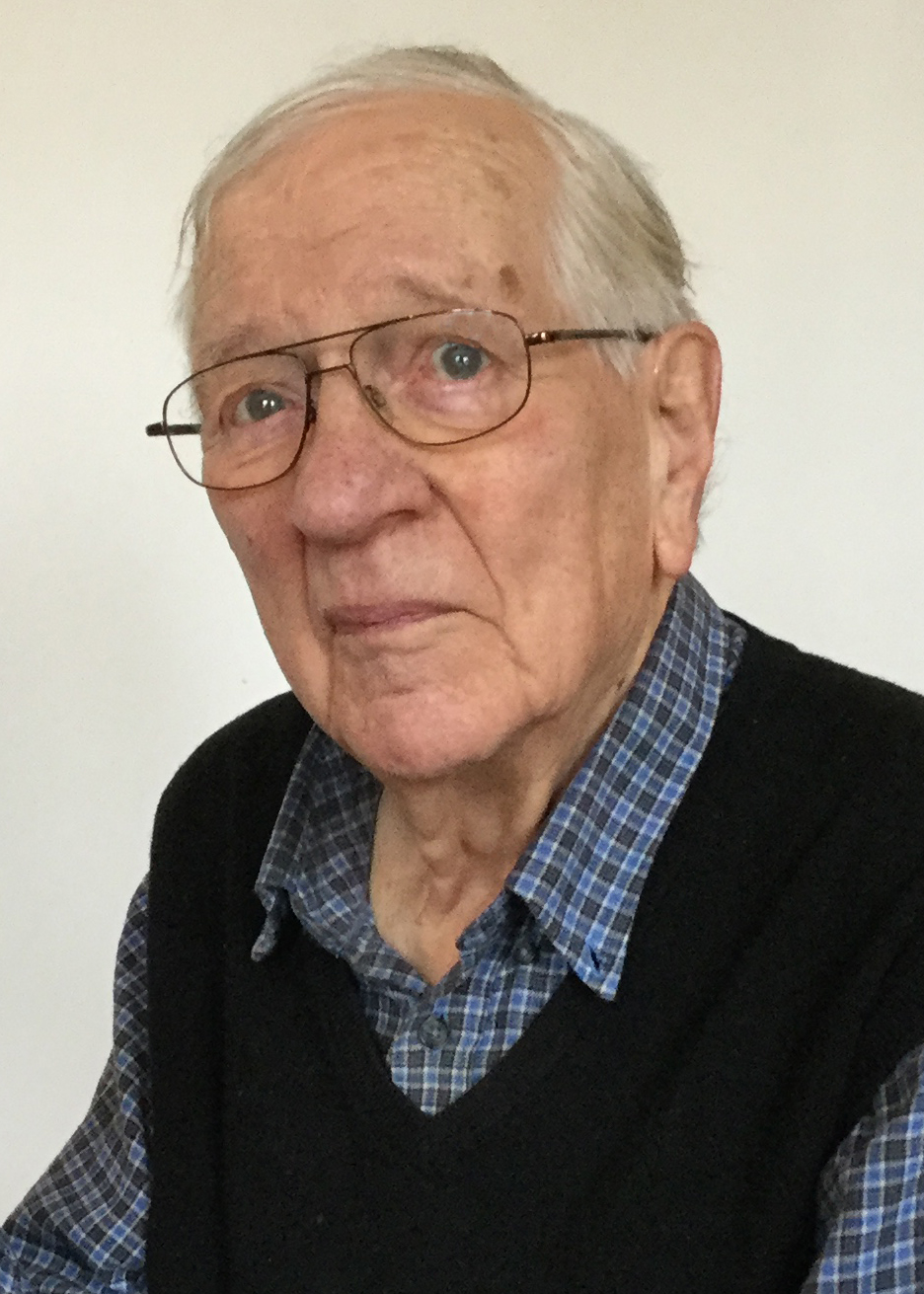
Horace BarlowFellow, Trinity College, Cambridge Perhaps more than any other vision scientist, Horace Barlow has shaped the way we think about how seeing depends on the underlying machinery of vision. His articulation of the single neuron doctrine—that the activity of a single neuron is significant for seeing—and the corollary idea that the visual stimuli to which a neuron is most sensitive tell us about the neuron’s perceptual role, are now taken so much for granted that it is hard to appreciate how primitive were notions of the relationship between visual physiology and perception before him. His unfailing concentration on the act of seeing drove his efforts to use psychophysical and physiological insight to drive experimental measurement, and brought a clarity and incisiveness that was unlike anything that preceded it. The approaches he pioneered provide the foundation for much of contemporary visual neuroscience. |
| An important conceptual theme that runs through his career is information. In early work, this was evident in his rigorous application of statistical theory to understanding psychophysical and physiological thresholds. Later he applied it to higher-level perceptual decisions such as pattern recognition, symmetry perception, and perception of random dot motion. The interplay of information and efficiency underlies his work in encoding and entropy, and forms the basis of many of his theoretical contributions, notably his work on redundancy reduction and efficient coding. Information theory is now a standard part of the tool set of vision science, but it was Barlow who brought it to vision science and taught us to use it.
His profound influence on the way we think about vision should not overshadow the importance of his particular contributions, including: characterizing the nature of eye movements during fixation; establishing the quantum efficiency of vision both psychophysically and physiologically; learning the spatio-temporal organization of visual adaptation; discovering and deducing the behavioral significance of retinal ganglion cells with highly specific response properties; elucidating directional movement selectivity in retina; analyzing binocular disparity selectivity in cortex; and many more. Barlow trained in medicine at Harvard and University College Hospital before his graduate studies with E D Adrian in Cambridge. He held faculty positions at Cambridge and at the University of California, Berkeley. He has received many honors, among them elected Fellowship, the Ferrier Lectureship, and the Royal Medal of the Royal Society of London, the Australia Prize, the Tillyer Award of the Optical Society of America, the Karl Spencer Lashley Prize of the American Philosophical Society, and the Swartz Prize of the Society for Neuroscience. Barlow feels happiest, and proudest, about having worked in a community of scientists who are leaping towards a deeper understanding of the relation between brain and mind. This goal once seemed utterly unreachable, and was openly mocked until quite recently. And in the end what he feels most grateful for is his own long association with Trinity College, where he learned the importance of arguing fiercely for strongly held beliefs. |
|
2016 Demo Night
Monday, May 16, 2016, 6:00 – 10:00 pm
Beach BBQ: 6:00 – 8:00 pm, Beachside Sun Decks
Demos: 7:00 – 10:00 pm, Talk Room 1-2, Royal Tern, Snowy Egret, Compass, Spotted Curlew and Jacaranda Hall
Please join us Monday evening for the 14th Annual VSS Dinner and Demo Night, a spectacular night of imaginative demos solicited from VSS members. The demos highlight the important role of visual displays in vision research and education. This year’s Demo Night will be organized and curated by Gideon Caplovitz, University of Nevada, Reno; Arthur Shapiro, American University; Gennady Erlikhman, University of Nevada, Reno and Karen Schloss, Brown University.
Demos are free for all registered VSS attendees and their families and guests. The Beach BBQ is free for attendees, but YOU MUST WEAR YOUR BADGE to receive dinner. Guests and family members must purchase a ticket for the Beach BBQ. You can register your guests at any time at the VSS Registration Desk, located in the Grand Palm Colonnade. A desk will also be set up on the Seabreeze Terrace at 6:30 pm.
Guest Prices: Adults $25, Youth (6-12 years old) $10, Children under 6 are free.
The following demos will be presented from 7:00 to 10:00 pm, in Talk Room 1-2, Royal Tern, Snowy Egret, Compass, Spotted Curlew and Jacaranda Hall:
Action Adaptation Demo
Stephan de la Rosa, Laura Fademrecht, Max Planck Institute for Biological Cybernetics
It is often assumed that visual action recognition is robust and hence the same action is always perceived in the same way. Contrary to this assumption, this demonstration will show that action recognition is malleable and can be transiently changed by the prolonged exposure to an action.
Audiovisual Rabbit Illusion
Monica Li, Noelle Stiles, Shinsuke Shimojo, Caltech
In general, vision dominates perception in the spatial domain, and audition in the temporal. What does one perceive when conflicting stimuli are presented in the spatial and temporal domain? We have found that audition can “postdictively” (i.e. retroactively) produce or suppress a visual flash. Stop by to view the audiovisual illusory and invisible rabbit, as well as the double flash illusion and an augmented color phi phenomenon.
Biological Motion
Andre Gouws, Tim Andrews, Rob Stone, University of York
A real-time demonstration of biological motion. Walk, jump, dance in front of the sensor and your actions are turned into a point light display, Using an X-box Kinect sensor and our free software, you can produce this effect for yourself.
Blink-Induced-Blindness During Multiple Object Tracking
Deborah J. Aks, Zenon Pylyshyn, Rutgers University; Jiye Shen, SR Research Ltd.
Your eye-blinks will trigger changes during multiple-object-tracking. Can you distinguish whether objects halt or continue to move during eye-blinks, or which objects have changed surface properties? Perceptual suppression may render you less aware than you might expect.
Contour Camouflage
Zhiheng Zhou, Lars Strother, University of Nevada, Reno
We show three types of perceptual hysteresis in which a contour either appears or disappears. First, a camouflaged contour becomes visible as the density of a background becomes insufficiently dense to maintain camouflage. Second, a contour becomes invisible as the density of a camouflaging background becomes sufficiently dense to conceal the contour. Third, a contour becomes visible against a camouflaging background and remains visible for up to several seconds and eventually fades. Interestingly, the smoothness of the contour modulates the duration of visibility or camouflage similarly in all three cases.
Co-Presence Experience with Wide Area Tracked System
Matthias Pusch, WorldViz
An interactive Virtual Reality experience will be shown in a large area tracked space.
The system will utilize Oculus hardware for one participant and HTV VIVE hardware for the other participant. The participants will be able to see representations of each other in the Virtual Space, experience interactivity and collaboration and will even be able to give each other a virtual ‘high five’, which will match the real reality ‘high five’.
Estimating Human Colour Sensors from Simple Colour Ranking
Dr. Maryam Darrodi, University of East Anglia
Let’s find out how your cones respond to a certain colour category say red. The task is to simply rank some colour pairs in terms of redness. Through “Rank-Based Spectral Estimation” technique the result will be a transformation from your cone spectral sensitivities to the hypothetical internal representations of red.
The Ever-Popular Beuchet Chair
Peter Thompson, Rob Stone, Tim Andrews, University of York
A favorite at demo Night for the past few years, the Beuchet chair is back with yet another modification. The two parts of the chair are at different distances and the visual system fails to apply size constancy appropriately. The result is people can be shrunk or made giants.
Eye Movement Induced Apparent Movement
Frédéric Gosselin, Université de Montréal
While you eye track the tip of a moving pencil, sparse bright dots flashed periodically appear to move in the direction opposite to that of the pencil at a speed inversely proportional to the flash rate.
Illusory Drifting Within a Window
Stuart Anstis, University of California San Diego; Sae Kaneko, Tohoku University
When a striped disk moves across a flickering background, the stripes paradoxically seem to move faster than the disk itself. We attribute this illusion to reverse-phi motion, which slows down the disk rim but does not affect the stripes.
An Inconsistency Between Different Ways of Matching Seen and Felt Positions
Eli Brenner, Cristina de la Malla, Irene Kuling, Vrije Universiteit Amsterdam
If you try to move your hidden right hand to a visible target you will end up slightly off the target. The same will happen if you do this with your left hand. Will the two hands feel aligned after they have both been matched to the same visual target?
The Money Business Illusion
Anthony Barnhart, Carthage College
The Money Business Illusion demonstrates how time-tested techniques from the theatre can be fused with standard psychophysical tasks from the laboratory to create ecologically valid stimuli for empirical research in attention and perception.
Motion Aftereffects and Grating Induction in a Blank Field
Christopher Tyler, Smith Kettlewell Eye Research Institute
Motion aftereffects are generally understood to require a patterned test field for their induction. Following fixation an induction field of eccentricity-scaled moving bands, however, this demo exhibits strong bands of motion in a blank test field, perhaps thus corresponding to Wertheimer’s (1912) concept of “pure phi”.
Orbiting Black/White Rays Produce an ‘Illusory’ Grey Disk
Sae Kaneko, Tohoku University; Stuart Anstis, Neal Dykmans, University of California San Diego; Patrick Cavanagh, Dartmouth College; Mark Mitton, Magician
A black and white sectored pattern is moved in a circular orbit at 3—4Hz, without rotating. Result: an illusory smaller uniform gray disk centred within the sectored pattern, with diameter about equal to the orbit. Disk looks larger during dark adaptation. Explanation: Time averaging plus motion deblurring.
Perceived 3D Shape Toggles Perceived Glow
Minjung Kim, New York University, York University; Laurie M. Wilcox, Richard F. Murray, York University
What makes an object appear to emit light, or glow? We show that perceived 3D shape is critical to the appearance of glow, and that we can toggle the perceived glow on and off when motion or binocular disparity information is used to invert a surface’s perceived 3D shape.
Point-Light Motion Materials: Shattering and Splattering, Can You Guess the Substance?
Alexandra C. Schmid, Katja Doerschner, University of Giessen
Image motion in point-light walkers provides a powerful cue to biological motion. We will present simulations of point-light materials that shatter, splatter, squish, tear and flop. Can you guess what substance each object is made of? When the optical properties of the materials are revealed, find out how they interact with motion cues to alter your perception of each substance.
Real-Time Removal of Low-Spatial-Frequency Content
Laysa Hedjar, Erica Dixon, Arthur Shapiro, American University
We remove low spatial frequency content from a video camera’s real time feed. The resultant image can account for many brightness illusions and shows invariance to changes in the color of the global illumination.
Reversing Active Visual Experience: Vivid Perception During Saccades
Martin Rolfs, Humboldt Universität zu Berlin; Eric Castet, CNRS & Aix-Marseille University; Sven Ohl, Humboldt Universität zu Berlin
Active vision relies on information reaching the eyes during fixation. Motion, blur, and temporal gaps introduced by saccadic eye movements escape our experience. Using a high-speed projection system, we will induce vivid motion perception during saccades—revealing the gaps between fixations—and explore factors that disguise it in normal vision.
Self-Luminosity Perception in a Reverspective
Alan Gilchrist, Rutgers Newark
Use of a 3D canvas, as in the delightful “reverspective” paintings of Patrick Hughes, allows a larger luminance range than normal, because different facets of the canvas receive different amounts of illumination. Viewed monocularly the observer sees a hallway (concave) with a white ceiling and glowing ceiling lights. Seen with two eyes, the display is convex, lit from above, the “ceiling” is black, and the “lights” are merely white trapezoids.
SMI Demonstrates Eye Tracking for Immersive Perception Research Based on Samsung Gear VR Headset
Lisa Richardson, SensoMotoric Instruments, Inc.
SensoMotoric Instruments (SMI) will demonstrate their proven Eye Tracking HMD technology for immersive perception research. The new product, based on a Samsung GearVR headset, supports instant live observation of eye movements in the virtual scene and brings undeniable benefits to spatial cognition research and similar projects.
Stimulus Induced Nystagmus and Dynamic Pupil Demonstrations
Greg Perryman, Kurt Debono, SR Research Ltd.
Experience immediate feedback based on your pupil-size as you observe simple stimuli or undertake a simple cognitive load task. In another demonstration, experience nystagmus eye-movements generated from a moving sin-wave grating.
The Stolen Voice Illusion
David Brang, Satoru Suzuki, Marcia Grabowecky, Northwestern University
Male and female faces articulating phonemes are presented sequentially with increasing delay. Although speakers’ voices are always mismatched (e.g., male-face/female-voice), individuals fail to notice the gender-mismatch even at delays of ~500 ms. This novel illusion reveals that visual identity information overrides auditory temporal cues about when a voice is heard.
StroboPong
Brought to you by VSS and the Demo Night Committee
Back by popular demand. Strobe lights and ping pong!
Suppression of Saccadic Suppression
Peter April, Jean-Francois Hamelin, Stephanie-Ann Seguin, Danny Michaud, VPIXX Technologies
This demo uses the PROPixx high refresh rate DLP projector to show stimuli which are invisible during your fixations, and which magically appear only during your saccades.
The Synoptic Art Experience
Maarten Wijntjes, Fan Zhang, Delft University of Technology
The synopter gives both eyes similar perspectives, thus annihilating binocular disparities and removing the flatness cue of the picture surface. We found that it is very interesting an enjoyable to specifically use the synopter for viewing artworks. You will be able to synoptically view a large variety of paintings.
Thatcherize Your Face
Andre Gouws, Peter Thompson, University of York
The Margaret Thatcher illusion is one of the best-loved perceptual phenomena. Here you will have the opportunity to see yourself ‘thatcherized’ in real time and we print you a copy of the image to take away.
Vision Scientists Still Love Drifting Gabors
Matthew Harrison, Gennady Erlikhman, Gideon Caplovitz, University of Nevada, Reno
Building off our demonstration from last year, we present several novel configurations of drifting Gabors that result in surprising global motion percepts.
2016 Young Investigator – Nicholas Turk-Browne
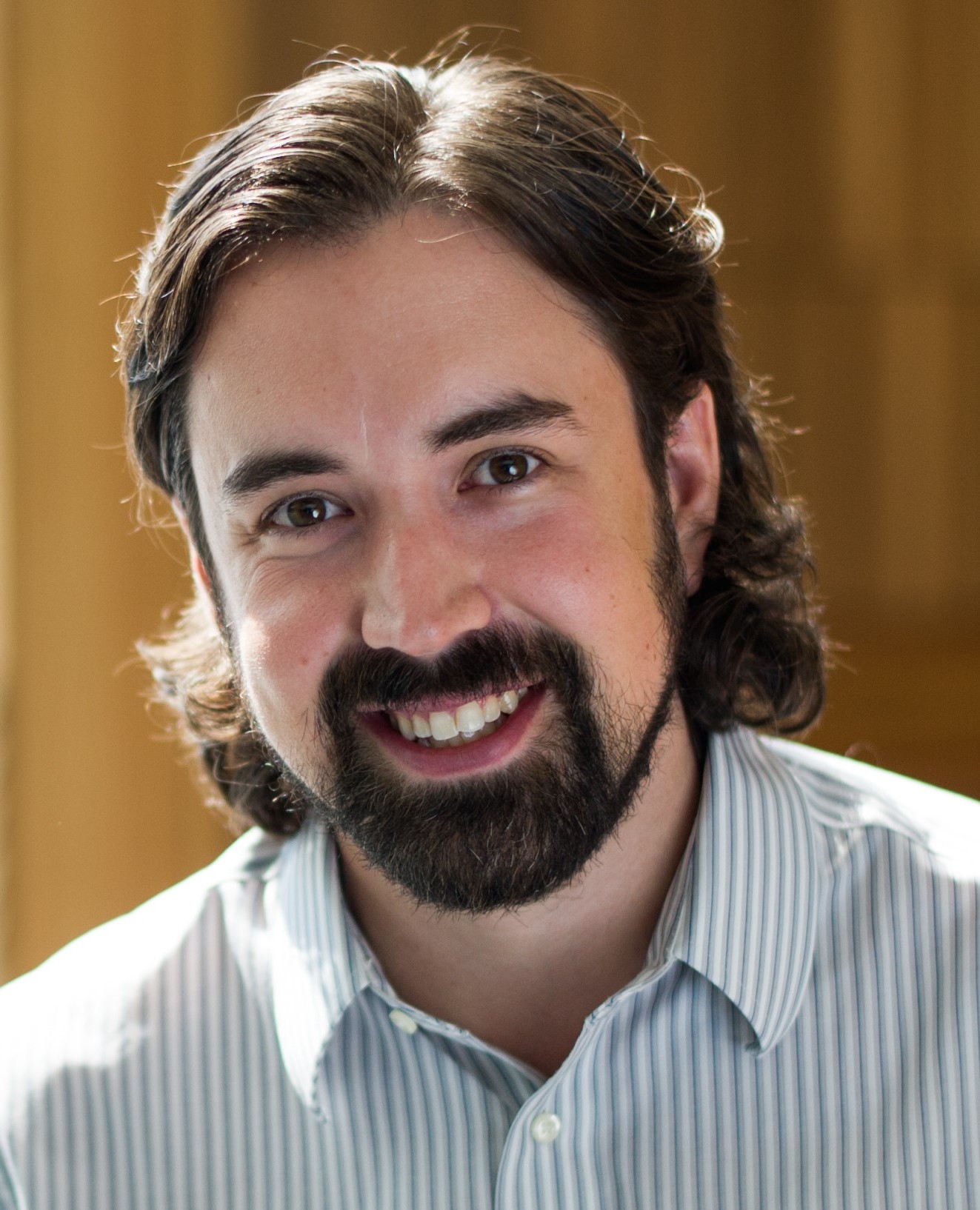 |
Nicholas Turk-BrowneAssociate Professor, Associate Chair, Department of Psychology, Princeton University Nicholas Turk-Browne is the 2016 winner of the Elsevier/VSS Young Investigator Award. Trained at the University of Toronto and then at Yale University, Nicholas Turk-Browne was awarded a PhD in Cognitive Psychology in 2009 under the supervision of Marvin Chun and Brian Scholl. Following his PhD, Nick took up a position at Princeton University, where he is currently an associate professor. |
| In the past 7 years following his PhD, Nick has established an active and dynamic lab that uses multidisciplinary methodologies to advance our understanding of the neural circuits that mediate visual cognition. Nick combines behavior, brain imaging, and computational modeling to bridge across key areas in the field of visual cognition: visual learning, memory and attention. His pioneering work on visual statistical learning has demonstrated that our ability to extract perceptual regularities relies on interactions between the hippocampus and the visual cortex. Nick has shown that this circuit supports predictive representations based on implicitly learned associations. Further, his work shows that — although implicit — statistical learning can be modulated by task demands and, in turn, learned regularities automatically draw attention. Nick’s contributions extend to groundbreaking methodological developments that combine neuroimaging and machine learning to understand the brain dynamics that support visual cognition. Finally, Nick’s recent work using neural fluctuations as feedback during real-time fMRI to train attention has strong potential for translational clinical applications.
Elsevier/Vision Research Article Attention and perception in memory systemsMonday, May 16, 12:30 pm, Talk Room 2 The labeling of brain structures by function, such as the “visual” system, “attention” networks, and “memory” systems, reinforces an appealing division of cognitive labor over the brain. At the same time, neural representations can be widely distributed and real-world behaviors require the coordination of much of the brain. An alternative way to think about brain function is in terms of the computations that different brain regions and networks perform and to try to understand when and how these computations participate in different cognitive processes. In this presentation, I will discuss some recent findings from my lab that illustrate this perspective, particularly about the involvement of memory systems in attention and perception. First, I will show that goal-directed attention modulates the state of the hippocampus — the canonical memory system in the brain — and through this, determines what aspects of visual experience we remember. Second, I will show that pattern completion, a core computation of the hippocampus, supports predictive coding in early visual cortex. These and other studies highlight the broad reach of vision science in the mind and brain.
|
|
2016 Funding Workshop
VSS Workshop on Grantsmanship and Funding Agencies
No registration required. First come, first served, until full.
Saturday, May 14, 2016, 1:00 – 2:00 pm, Snowy Egret
Discussants: Michael Steinmetz, Todd Horowitz and Aude Oliva
You have a great research idea, but you need money to make it happen. You need to write a grant. But where can you apply to get money for vision research? What do you need to know before you write a grant? How does the granting process work? Writing grants to support your research is as critical to a scientific career as data analysis and scientific writing. In this session, Mike Steinmetz (National Eye Institute) and Todd Horowitz (National Cancer Institute) will give you insight into the inner workings of the extramural program at the National Institutes of Health. Additionally, Aude Oliva will present information on funding opportunities for vision science at the National Science Foundation, and on collaborative programs between NSF and NIH.
|
|
|
 Michael Steinmetz
 Todd Horowitz
 Aude Oliva
2016 Davida Teller Award – Janette Atkinson
VSS established the Davida Teller Award in 2013. Davida was an exceptional scientist, mentor and colleague, who for many years led the field of visual development. The award is therefore given to an outstanding woman vision scientist with a strong history of mentoring.
Vision Sciences Society is honored to present Dr. Janette Atkinson with the 2016 Davida Teller Award.
Janette Atkinson
Emeritus Professor of Psychology and Developmental Cognitive Neuroscience, University College London
Visiting Professor, University of Oxford
Visual Development Unit, London and Oxford
 Janette Atkinson is a worldwide leader in research on human visual development. She has made major advances in an extraordinarily wide range of basic and clinical areas, collaborating throughout her career, with vision scientists, ophthalmologists, optometrists and pediatric neurologists. Her impact on the field has been immense, both directly through innovative research, and indirectly through her mentorship and personal support to her students and collaborators.
Her career began in Cambridge University where she set up and led one of the first ‘baby labs’, the Visual Development Unit at Cambridge and subsequently at University College London (UCL, University of London) and Oxford. She was the first to use Davida Teller’s method of forced-choice preferential looking to measure contrast sensitivity, initially in the first months of life of her own child (Nature 1974), and subsequently with novel VEP measures in newborns. Using newly devised behavioral and VEP/ERP methods, she demonstrated the onset of binocularity, orientation sensitivity, OKN, and fixation shift control of attention, leading to her pioneering neural model of cortical/subcortical interaction in early human development. Janette originated the use of photorefraction and videorefraction with infants, and led two unique population screening studies showing that spectacle correction of infants’ refractive errors could improve visual outcome, reducing strabismus and amblyopia by 4 years of age. Having used her methods of assessing cortical development with at-risk groups, particularly infants born preterm and children with Williams syndrome, she has moved on to studying global processing, leading to her influential idea of ‘Dorsal Stream Vulnerability’ in many children with genetic developmental disorders, perinatal brain injury and CVI (Cerebral Visual Impairment). She argues for the continuity and associations in dorsal stream development between global motion and attentional, spatial, visuo-cognitive, and visuomotor development, and has devised assessments for this whole area in both typical and atypically developing children.
She has been a mentor and advisor, giving generous support to many students, colleagues and collaborators, both scientists and clinicians, and a role model showing young female scientists that the highest levels can be reached while sustaining close family life with her four children. More widely, she has been a tireless advocate for women’s scientific careers, as a member of ARVO’s Equality and Diversity Committee and through the UK’s Athena SWAN scheme for advancing women’s careers in science. She led UCL’s successful bid for a SWAN Charter Award, one of the first 12 UK universities to achieve this award.
In recognition of her internationally acclaimed research record, she has been elected as a Fellow of the British Academy, the Academy of Medical Sciences and the Academia Europaea.
Visual science as a key to typical and atypical development
Monday, May 16, 2016, 12:30 – 1:30 pm, Talk Room 2
My research on vision development has always been inspired by the prospect of understanding and helping the development of vision in infants and children with clinical problems, including developmental disorders such as autism, Downs syndrome and cerebral palsy. Initial advances in the basic science of human visual development, since the first measurements of infants’ acuity and contrast sensitivity, have led directly into applications for identifying and assessing paediatric ophthalmological and neurodevelopmental visual disorders.
I will briefly review a few diverse highlights of our own translational work in the Visual Development Unit, and suggest unanswered questions arising from our current knowledge:
- Indicators of the onset of visual cortical function, based on our model of cortical/subcortical interactions, allowed us to identify infants with perinatal brain injury (some with very preterm birth) resulting in CVI (Cerebral Visual Impairment ) and predict subsequent neurocognitive outcome.
- Measurements of infants’ accommodation and refraction using photorefractive instruments designed in the VDU, made it possible to carry out population screening programmes of 8000+ typically developing 9- month old infants identifying those at risk of strabismus and amblyopia. We demonstrated that early spectacle correction of infants with significant hyperopic refractive errors could reduce the number of children who develop these common disorders.
- Tests of children’s global form and motion processing in extra-striate visual areas identified ‘dorsal stream vulnerability’ as a feature of many diverse neurodevelopmental disorders e.g. Williams syndrome, autism , hemiplegia. Recently we have found that global motion sensitivity is associated with MRI surface area structural measures in parietal lobe in typically developing children. Good motion sensitivity is correlated with good visuo-motor ability and good early mathematical ability. Poor global motion sensitivity, relative to static form sensitivity, in children with developmental disorders, is associated with spatial, visuo-motor and attention deficits.
- Child-friendly tests of visual attention (the Early Child Attention Battery devised in the VDU) enable an individual child’s attention profile of abilities across different components of attention, to be measured rapidly in both typically developing preschool children and in children with genetic developmental disorders with low mental age.
My research has started to answer questions about both the typical and atypical developing visual brain, but it has raised many more unanswered ones. For example , we still do not know the critical period of plasticity for many of the visual networks which develop in the first few years of life. If we understood the epigenetic factors controlling early visual brain growth and plasticity, then this might lead to success in future treatment of paediatric visual disorders. My hope is that some of these questions will be answered by future vision researchers (both women and men !) coming into the ‘developmental arena’ from a wide range of different disciplines.
2016 Public Lecture – Patrick Cavanagh
Patrick Cavanagh
Université Paris Descartes
 Patrick Cavanagh is the head of the Centre of Attention and Vision at the Université Paris Descartes and a Distinguished Research Professor at Dartmouth College. He received a undergraduate degree in Electrical Engineering from McGill University in 1968 and a PhD in Cognitive Psychology from Carnegie-Mellon University in 1972. He taught at the Université de Montréal from 1972 to 1989 and then at Harvard University from 1989 to 2008. Current projects study the roles of visual attention in selecting and creating visual representations, and the properties and strategies of visual attention in normal and brain damaged subjects. He has also explored the contribution of various features such as shadow, color, motion, and texture to representations of visual form and these experiments led to his interest in art as a source of data for neuroscience.
The Artist as Neuroscientist
Saturday, May 14, 11:00 am, Museum of Fine Arts, Marly Room, St. Petersburg, Florida
A piece of art can trigger many emotions and impressions, many of them just as the artist intended. However, the same painting may also reveal, unintentionally, much about the workings of the brain: how the brain recovers the light and space and surfaces that we see. Painters often stray from photorealistic styles, taking liberties with the rules of physics to achieve a more effective painting. Critically, some of these transgressions of physics such as impossible shadows, shapes, or reflections go unnoticed by viewers – these undetected errors are the ones that tell us which rules of physics actually count for visual perception. As artists find the rules they can break without penalty, they act as neuroscientists and we have only to look at their paintings to uncover and appreciate their discoveries. Which means that 40,000 years of art also counts as 40,000 years of documented, neuroscience research, a record unmatched in any other discipline. We will survey art from cave paintings to the modern era and show how to do “science by looking”, unlocking the discoveries in art every time you give it a painting a second, knowing look.
Cavanagh, P. (2005) The artist as neuroscientist. Nature, 434, 301-307.
Cavanagh, P., Chao, J., & Wang, D. (2008). Reflections in art. Spatial Vision, 21, 261-270.
Perdreau, F. & Cavanagh, P. (2011). Do artists see their retinas? Frontiers in Human Neuroscience, 5:171.
Sayim, B., & Cavanagh P. (2011). The art of transparency. i-Perception, 2, 679-696.
Sayim, B., & Cavanagh P. (2011). What line drawings reveal about the visual brain. Frontiers in Human Neuroscience, 5:118, 1-4
Attending the Public Lecture
The lecture is free to the public with admission to the museum. (Museum members: Free; Adults $17; Seniors 65 and older $15; Military with Id $15; College Students $10; Students 7-18 $10; Children 6 and under Free)
VSS attendees will receive free admission to the Museum May 13-18 by showing your meeting badge.
About the VSS Public Lecture
The annual public lecture represents the mission and commitment of the Vision Sciences Society to promote progress in understanding vision, and its relation to cognition, action and the brain. Education is basic to our science, and as scientists we are obliged to communicate the results of our work, not only to our professional colleagues but to the broader public. This lecture is part of our effort to give back to the community that supports us.
Previous Programs and Banner Images
Click a cover image to download the program in PDF format.
2026 | |
 2026 Website Banner | |
 2026 Abstracts Cover | |
2025 | |
 2025 Website Banner | |
 2025 Abstracts Cover | |
2024 | |
 2024 Website Banner | |
2023 | |
 2023 Program |  2023 Abstracts |
2022 | |
 2022 Program | |
2021 | |
 2021 Program | |
2020 | |
 2020 Program | |
2019 | |
 2019 Program |  2019 Abstracts |
2018 | |
 2018 Program |  2018 Abstracts |
2017 | |
 2017 Program |  2017 Abstracts |
2016 | |
 2016 Program |  2016 Abstracts |
2015 | |
 2015 Program |  2015 Abstracts |
2014 | |
 2014 Program |  2014 Abstracts |
2013 | |
 2013 Program |  2013 Abstracts |
2012 | |
 2012 Program |  2012 Abstracts |
2011 | |
 2011 Program |  2011 Abstracts |
2010 | |
 2010 Program |  2010 Abstracts |
2009 | |
 2009 Program |  2009 Abstracts |
2008 | |
 2008 Program |  2008 Abstracts |
2007 | |
 2007 Program |  2007 Abstracts |
2006 | |
 2006 Program |  2006 Abstracts |
2005 | |
 2005 Program |  2005 Abstracts |
2004 | |
 2004 Program | |
2016 Student Workshops
VSS Workshop for PhD Students and Postdocs:
|
 Eriko Self Eriko SelfEriko is a Professor and the Department Chair of Psychology at California State University, Fullerton. She is interested in the mechanisms governing visual perception and attention. Her recent projects include various factors that influence attentional control such as aging, motivation, and personality traits using psychophysical methods. As the chair of a department that holds 2,200 undergraduate majors, 100 master’s program students, and 80 full-time and part-time faculty members, she enjoys taking care of everyone in the department. |
 Katherine Moore Katherine MooreKatherine Moore is an Assistant Professor at Arcadia University, a comprehensive university in greater Philadelphia. Prior to Arcadia, she spent three years as a tenure-track professor at Elmhurst College. Katherine performs research collaboratively with undergraduates in her Attention, Memory, and Cognition laboratory, focusing on studies of visual attention, as well as music cognition and synesthesia. Prior to her faculty appointments, Katherine received her PhD from the University of Michigan and completed postdoctoral research at Yale University. |
 Nestor Matthews Nestor MatthewsNestor is an Associate Professor of Psychology and the Neuroscience Program Coordinator at Denison University. His psychophysical research program addresses issues in the spatial and temporal resolution of vision and attention, often probed by perceptual learning experiments. He has served on Denison’s tenure committee, tenure-appeals committee, and as Chair of the Denison University Faculty. He received his PhD in 1997 at Brown University and completed postdoctoral research at Columbia University before joining the Denison faculty in 2001. |
 Cathy Reed Cathy ReedCathy is a Professor of Psychology and Neuroscience at Claremont McKenna College. Using behavioral and electrophysiological measures, she investigates how vision, touch, and body position are integrated to influence perception, attention, object recognition, and emotional processing. Prior to joining the faculty at CMC in 2008, she spent 14 years as a member of the Psychology Department at the University of Denver. |
 Frank Tong Frank TongFrank Tong is a Professor of Psychology at Vanderbilt University. He is interested in understanding the fundamental mechanisms underlying visual perception, attentional selection, object processing, and visual working memory. He has received multiple awards for his research advances (including the VSS YIA award), for his work on fMRI decoding of visual and cognitive states. He particularly enjoys working with students and postdocs as they carve their path towards scientific discovery and independence, and currently serves as a VSS board member. |
VSS Workshop for PhD Students and Postdocs: So you want to start a lab?Sunday, May 15, 1:00 – 2:00 pm, Sabal/Sawgrass (Jacaranda Hall) OK, you got the job. Maybe it is the first job. Maybe it is the next job. In any case, you are moving and you are going to need to set up a new lab. How should you do that? What do you need to ask for? Where can you get help or advice? What are the biggest factors that go into the creation of a lab. Besides you and the ideas churning in your brain, you will need right people, projects, plans and backup plans if you are going to build a thriving lab culture. There will be mistakes and setbacks. How can those experiences be helpful, not discouraging? In this workshop, we will hear from four people with established labs. Bring your questions about negotiating the details with your new department, finding the right people for the new lab family, finding the funding to feed them and more. |
 Kalanit Grill-Spector Kalanit Grill-SpectorKalanit is a Professor in the Department of Psychology and the Stanford Neurosciences Institute at Stanford University. She is interested in understanding the functional, structural, and computational neural mechanisms underlying high-level vision. She has received multiple awards for her research including the Sloan Research Fellowship in Neuroscience and the Klingenstein Fellowship in Neuroscience. She strongly believes in hands-on mentorship and in instilling computational habits. She will share perspectives from her own experience, starting a lab as a foreigner with two young children. |
 Nick Turk-Browne Nick Turk-BrowneNick is Associate Professor and Associate Chair in the Department of Psychology at Princeton University. He studies perception, attention, learning, and memory, and especially how all of these processes interact, using a combination of behavioral, neuroimaging, neuropsychological, and computational approaches. He has received the APA Distinguished Scientific Award for Early Career Contribution to Psychology and grant support from NIH, NSF, the Templeton Foundation, and Intel Labs. He feels like he is still building his lab, and looks forward to insights from the other panelists about how to do so. |
 Andrew Welchman Andrew Welchman Andrew holds a Wellcome Trust Senior Fellowship and heads the Adaptive Brain Lab at the University of Cambridge. He works on 3D vision, perceptual learning and multisensory perception using behavior, modeling and imaging. He has a longstanding interest in facilitating individuals to develop their research careers from graduate students to fellows and junior faculty. He has established two new labs during his career and coordinated a European training network across labs. He has made plenty of mistakes and had lots of fun along the way. |
 Ione Fine Ione FineDr. Fine obtained her undergraduate degree from Merton College Oxford and her PhD from the Department of Brain and Cognitive Sciences at the University of Rochester. She is currently a professor in the Department of Psychology and a co-Director of the Neuroimaging Center at the University of Washington. Her research focuses on the role of experience in sensory processing, including measuring performance in patients who were implanted with electrode retinal prostheses and examining the effects of long term blindness on the brain using a combination of behavioral measurements and magnetic resonance imaging. She is an elected Fellow of the Optical Society of America. |
 Jeremy Wolfe Jeremy WolfeJeremy Wolfe is Professor of Ophthalmology and Professor of Radiology at Harvard Medical School. He is Director of the Visual Attention Lab at Brigham and Women’s Hospital. His research focuses on visual search and visual attention with a particular interest in socially important search tasks in areas such as medical image perception (e.g. cancer screening), security (e.g. baggage screening), and intelligence. He serves on the Board of VSS and recently arranged to have the sink in his lab repaired – but he is merely moderating this session. |
ARVO@VSS 2016
Information processing in a simple network: What the humble retina tells the brain
Time/Room: Friday, May 13, 2016, 5:00 – 7:00 pm, Talk Room 1-2
Organizers: Scott Nawy, PhD, University of Nebraska Medical Center and Anthony Norcia, Stanford University
Presenters: Greg Field, Michael Crair, William Guido, Wei Wei
This year’s biennial ARVO at VSS symposium features a selection of recent work on circuit-level analyses of retinal, thalamic and collicular systems that are relevant to understanding of cortical mechanisms of vision. The speakers deploy a range of state-of-the art methods that bring an unprecedented level of precision to dissecting these important visual circuits.
Circuitry and computation in the mammalian retina.
Speaker: Greg Field; USC
The mammalian retina is composed of ~80 distinct neuronal cell types. These neurons work in concert to parcel visual information into ~30 different RGC types, each of which transmits a different message about the visual scene to the brain. I will describe ongoing work in my lab to define the functional role of different cell types in the mammalian retina via the combination of large-scale multi-electrode array recordings and chemogenetic manipulation of genetically defined cell types. This combination of approaches is revealing the specialized roles played by different cell types to encode visual scenes for perception and behavior.
Retinal activity guides visual circuit development prior to sensory experience
Speaker: Michael C. Crair; Yale
Classic models emphasize an important role of sensory experience in the development of visual circuits in the mammalian brain. However, recent evidence indicates that fundamental features of visual circuits in the thalamus, cortex and superior colliculus emerge prior to the emergence of form vision. I will summarize our latest experiments that use in vivo optical imaging techniques and molecular-genetic manipulations in mice to demonstrate that spontaneous retinal activity, generated prior to vision, plays an essential role in sculpting the development of visual circuits in the mammalian brain.
Dissecting circuits in the mouse visual thalamus.
Speaker: William Guido; University of Louisville
The contemporary view of the dorsal lateral geniculate nucleus (dLGN) of thalamus is that of a visual relay, where the gain of signal transmission is modulated by a diverse set of inputs that arise from non-retinal sources. I will highlight our recent studies in the mouse, an animal model that provides unprecedented access into the circuitry underlying these operations.
Neural mechanisms of direction selectivity in the retina
Speaker: Wei Wei; Department of Neurobiology, The University of Chicago
Authors: Qiang Chen, David Koren and Wei Wei, Department of Neurobiology, The University of Chicago
The direction selective circuit in the retina computes motion directions and conveys this information to higher brain areas via the spiking activity of direction selective ganglion cells. While multiple synaptic mechanisms have been implicated in the generation of direction selectivity in the retina, it is unclear how individual mechanism modulates the firing patterns of direction selective ganglion cells. Here, we aim to unambiguously differentiate the contributions of distinct circuit components to direction selectivity by loss-of-function studies using genetic, electrophysiological and functional imaging methods. Our results highlight the concerted actions of synaptic and cell-intrinsic mechanisms required for robust direction selectivity in the retina, and provide critical insights into how patterned excitation and inhibition collectively implement sensory processing in the brain.